FOREST FLASH
October 2025
In Pacific Forest Trust’s e-newsletter, Forest Flash, we send you the most recent PFT news and updates on forests, clean water, climate, and wildlife. Subscribe here.
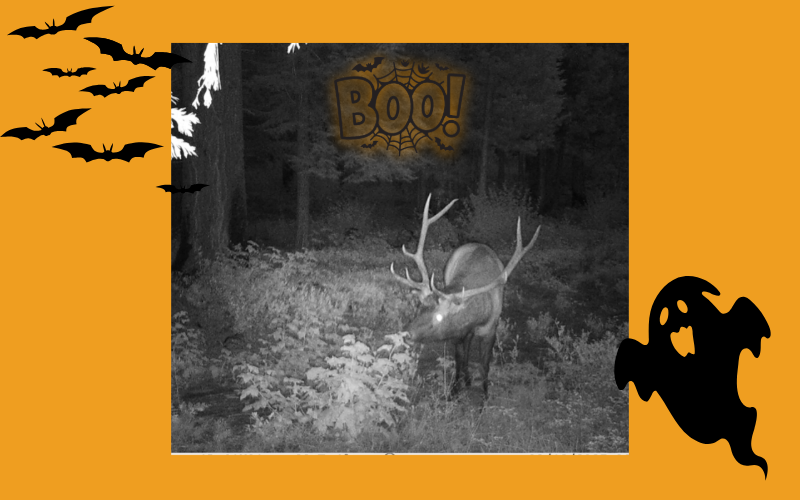
Specific property names and locations are intentionally omitted to protect sensitive wildlife habitat and prevent trespassing.
Pacific Fisher
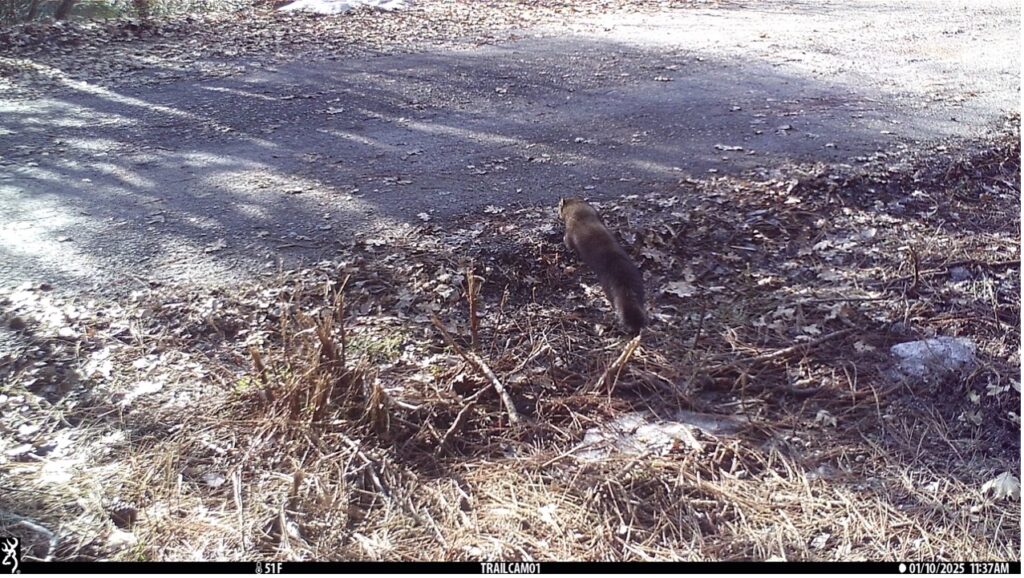 Pacific fishers are one of the rarest carnivores in Northern California, and their presence signals high-quality habitat. They prefer cool, shady forests with large, old trees containing cavities for resting and denning. After a recent low-intensity fire, we expected these forest phantoms to steer clear for a while due to reductions in understory and lower tree limbs. Instead, they’ve returned quickly—perhaps drawn by fresh growth and available prey. Fishers rely on dense cover to ambush small mammals like rodents, hares, birds, and even porcupines. Fierce, secretive, and agile, they’re among the forest’s most fascinating (and formidable!) hunters.
Black Bear
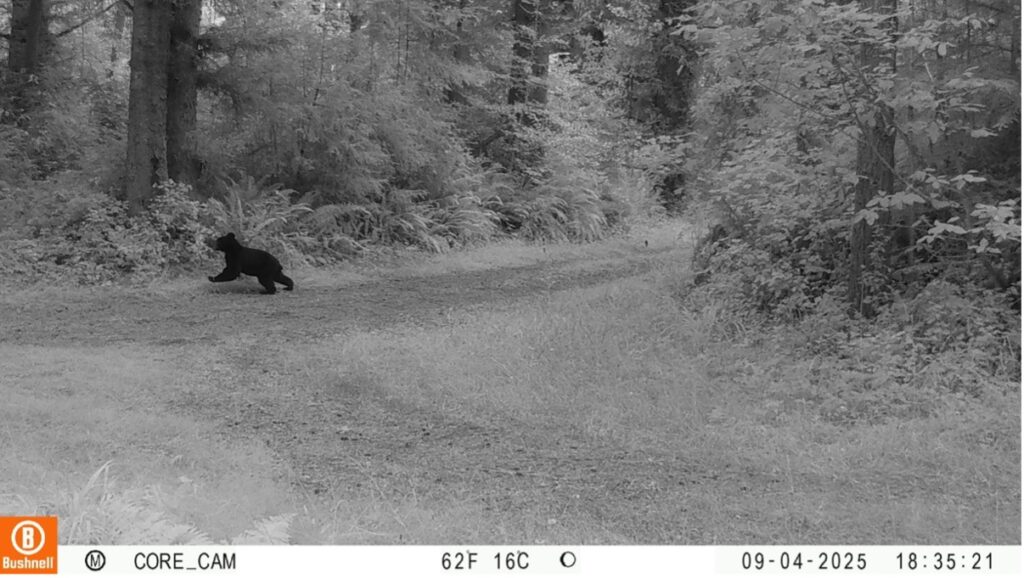 Black bears are the ultimate buffet browsers, eating berries, roots, nuts, fungi, insects, small mammals, and even honeycombs. Known by Indigenous communities as experts in forest foods, bears are deeply connected to biodiversity. A reminder: never feed bears; human food can endanger both them and people!
Mountain Lion
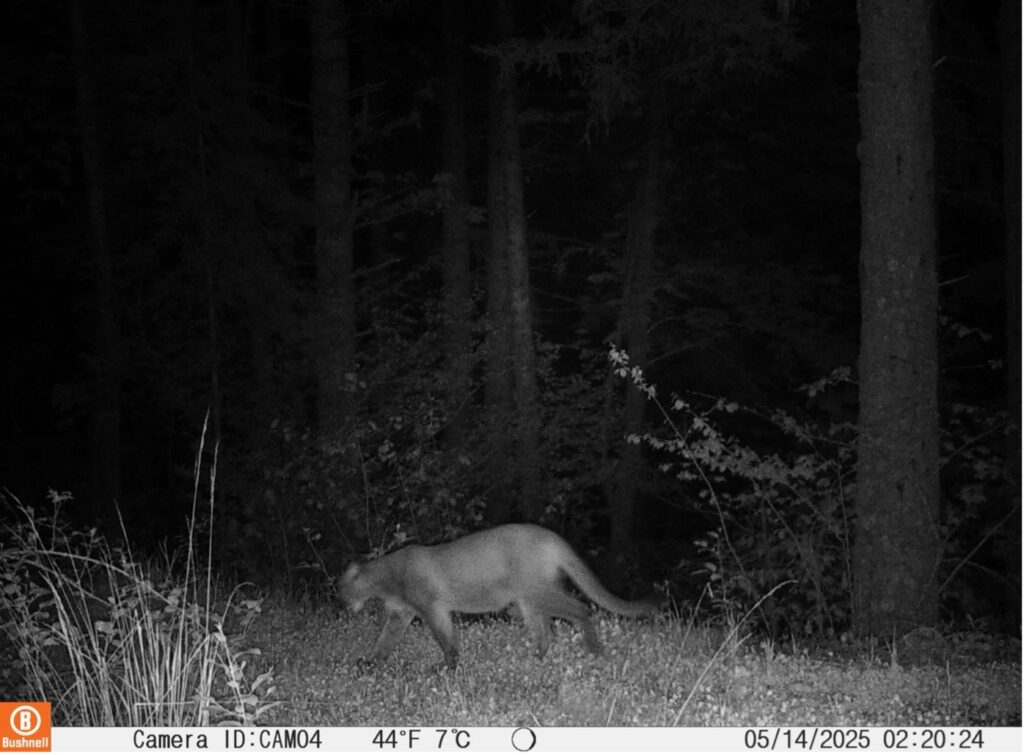
These apex predators thrive in large, connected forested landscapes with thick cover for stalking deer, elk calves, and smaller mammals like raccoons. They often follow ridgelines and even use roads or trails for easier travel. Seeing one on camera is a powerful reminder of the importance of intact habitat corridors between developed areas.
Bobcat
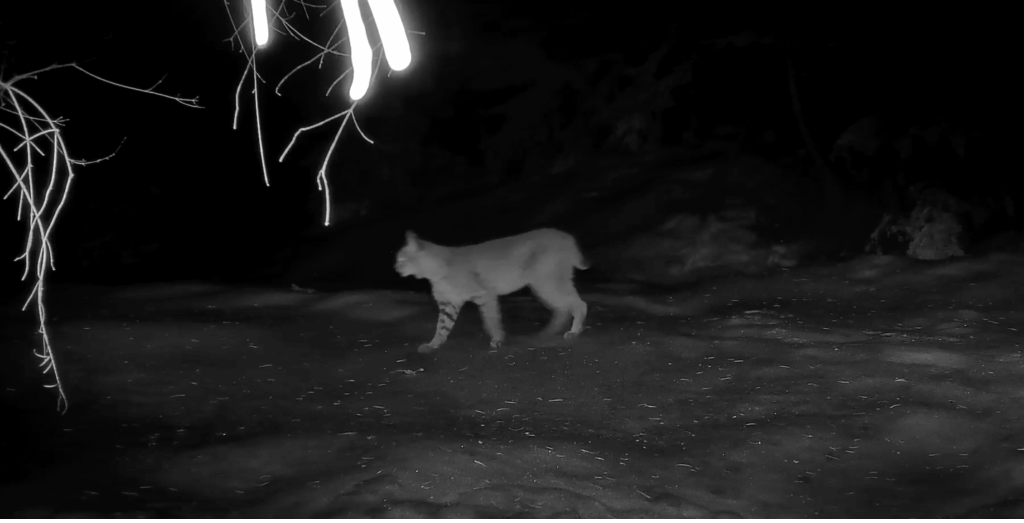
Smaller than mountain lions but just as stealthy, bobcats favor habitat “edges” where forests meet openings, ideal for ambushing birds and small mammals. Sometimes they like to mark their territories very consistently—used like feline message boards—and in one PFT-managed forest, we use these to help us identify areas to protect during management.
Elk
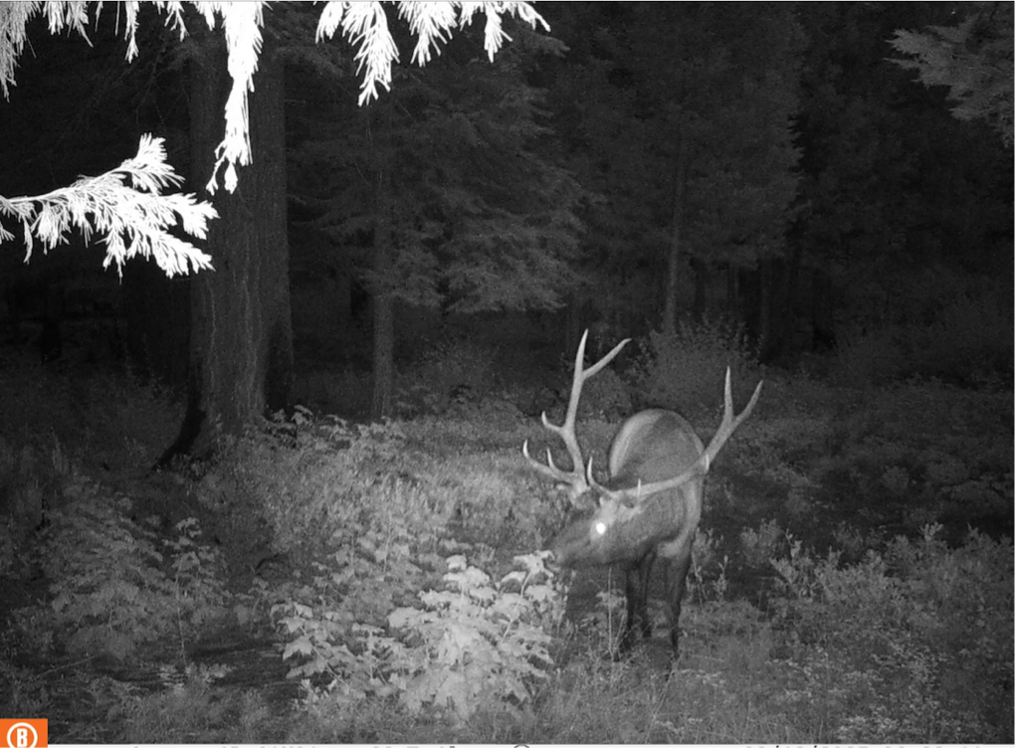
This recent sighting of elk is especially exciting, as they haven’t been observed in this forested landscape for many decades, according to local accounts. These wide-ranging grazers are known to migrate from higher-elevation summer ranges to lower, more temperate forests and oak woodlands for winter foraging. Elk depend on a varied habitat mosaic: meadows and open woodlands to build strength during summer, forest cover for nighttime security and predator avoidance, and riparian corridors with willow, aspen, and other vegetation to help sustain them through colder months. They may have been attracted by fresh vegetation and fungi following recent fire activity, shifting predator dynamics (including known wolf presence in nearby highlands), or simply the availability of diverse forage like grasses, forbs, shrubs, and mushrooms. Their return is a hopeful indicator of healthy, connected habitat.
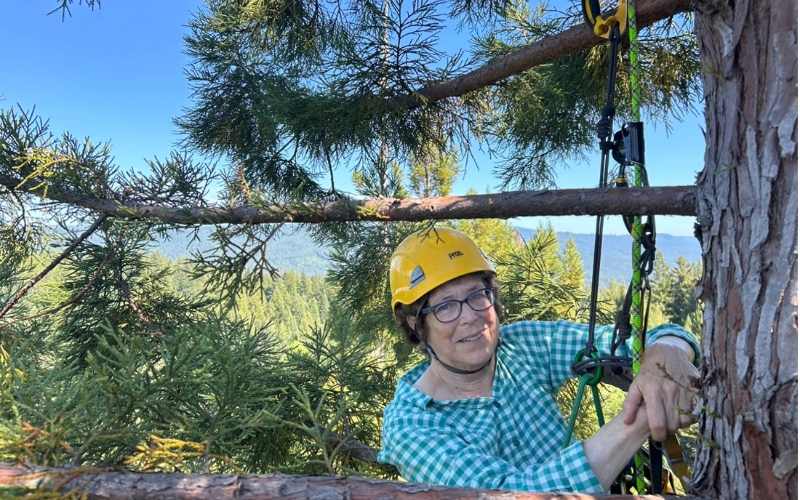
Now, several years in, our work is revealing both promising results and new insights that are shaping our next steps. During a recent field visit, PFT President Laurie Wayburn climbed up to see the fern mats again firsthand—ascending into the canopy to see how they were doing. The large majority of the ferns “planted” across 15 trees have remained intact and continue to support fern growth. The ferns are gradually integrating with their host trees, collecting soil and organic matter, and sporing—releasing these tiny reproductive cells into the rest of the forest to find more places to take hold and grow.
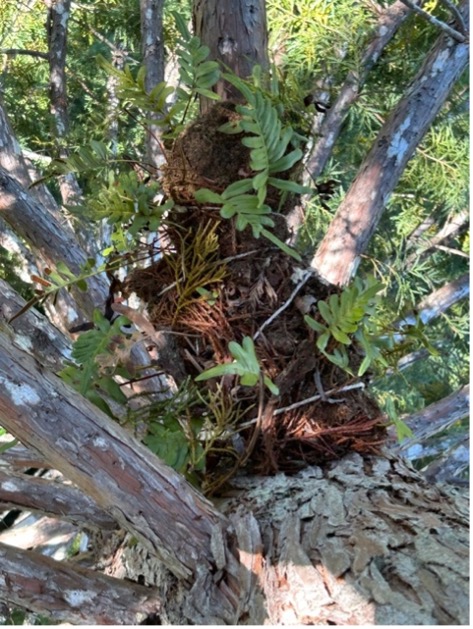
A thriving young fern atop a +/- 180 foot young redwood.
At the same time, our findings underscore the challenges of canopy restoration in younger redwood forests. There simply isn’t enough woody structure in the upper canopy to anchor large fern expansion at this stage of forest development. As a result, we are also now exploring opportunities to plant in the mid-canopy, where there are larger branches and more defect, yet enough light and wind exposure to sustain ferns and disperse the spores.
This adaptive approach reflects the project’s true goal: to learn and demonstrate what interventions can help accelerate the recovery of the canopy layer. Even as we learn, this work continues to deepen our understanding of redwood ecology and management and help inform restoration efforts across the redwood region.
Please consider a donation to the Pacific Forest Trust. Your help—in all capacities—makes our work possible. Thanks for supporting us as we support forests!
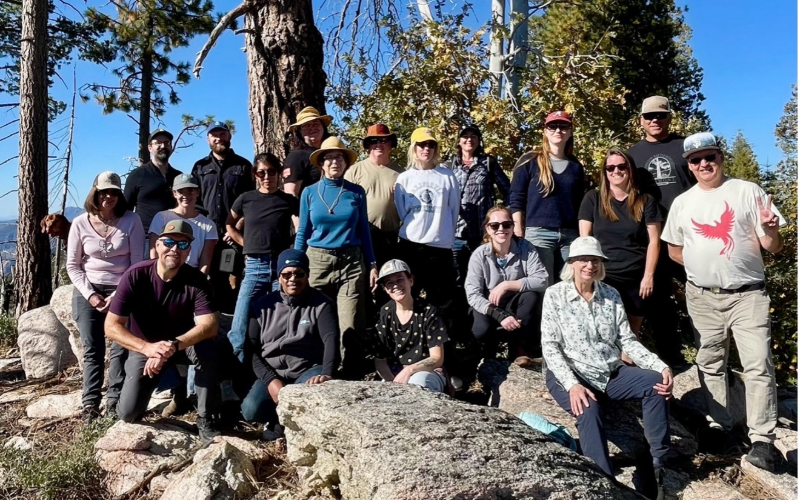
The retreat offered a valuable opportunity to assess our progress and build on recent accomplishments in strategic conservation, policy innovation, and partnerships. Through focused planning sessions, Team PFT spent valuable time mapping out several ambitious upcoming projects and strategizing ways to build on our recent momentum in forest conservation and climate action. These conversations were grounded in the understanding that our diverse roles—from field-based stewardship to legislative advocacy to operational support—are all deeply interconnected in delivering permanent conservation outcomes.
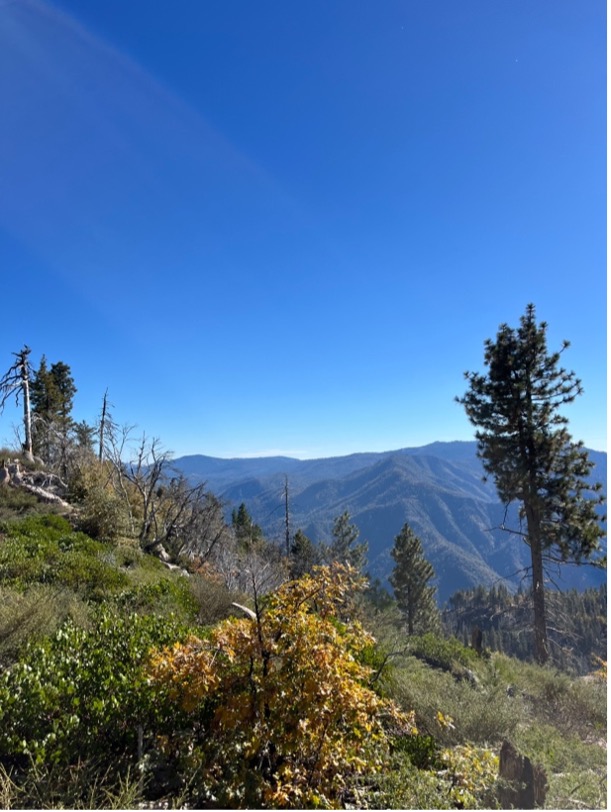
The view, with fall colors, from gorgeous Henness Ridge!
The retreat concluded with a visit to our Henness Ridge property—over 900 acres of ancestral Yosemite homelands now in the process of being returned to the Southern Sierra Miwuk Nation through a landmark grant from the California Natural Resources Agency’s Tribal Nature-Based Solutions Program. From the ridge, with sweeping views of Yosemite Valley and both branches of the Wild and Scenic Merced River, our staff reflected on the profound significance of this return and the transformational stewardship that will follow.
Standing on land soon to be returned to Tribal ownership and care reaffirmed a deeper purpose of our work. In a world that often feels chaotic and uncertain, witnessing a return of this magnitude—one that will ensure an intact wild landscape, honor ancestral connection, and set the stage for generational stewardship—reminds us of the lasting change we are building. We closed the retreat not only with a clear roadmap for 2026, but with a renewed sense of responsibility and shared purpose in advancing PFT’s vision, together.
ICYMI
In case you missed it (ICYMI), here are some other exciting things PFT has been involved in lately!