FOREST FLASH
June 2025
In Pacific Forest Trust’s e-newsletter, Forest Flash, we send you the most recent PFT news and updates on forests, clean water, climate, and wildlife. Subscribe here.
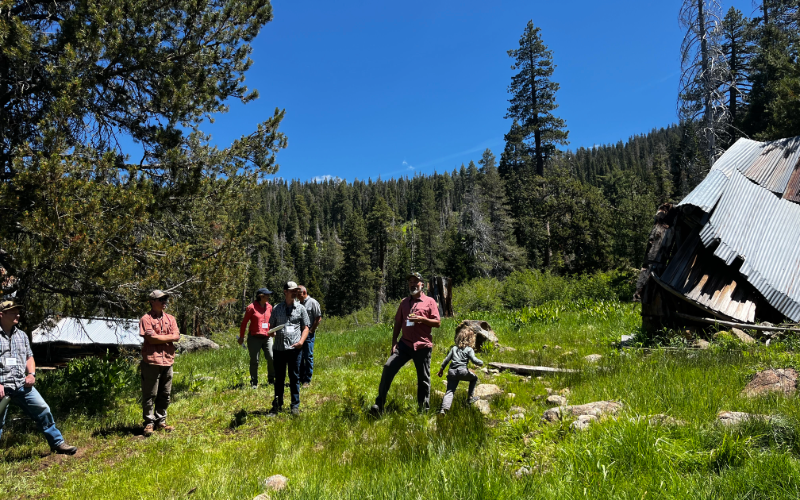
Pacific Forest Trust and Watershed Research and Training Center (WRTC), joined with key partners and supporters for a celebratory tour of the newly conserved Trinity Headwaters property at the end of June. We gathered to celebrate the successful close of a landmark and unique conservation project that simultaneously acquired this almost 11,000-acre property, conserved it with a working forest conservation easement held by PFT and then transferred ownership to the WRTC. This Trinity-based nonprofit will steward the land under the guidance and terms of the working forest conservation easement. This partnership ensures the property will be managed for watershed health, habitat restoration, and climate resilience while enabling the broader community to benefit from access to recreation, education and jobs in restoration forest management.
Nick Goulette of the WRTC, who first conceived of the potential for this project, noted that “this is a dream come true.” Attendees included representatives from the Nor Rel Muk Wintu Nation, the U.S. Forest Service, the Wildlife Conservation Board, the office of State Assemblymember Chris Rogers, PFT’s Board, as well as a Trinity County Supervisor and Sierra Nevada Conservancy Board Member.
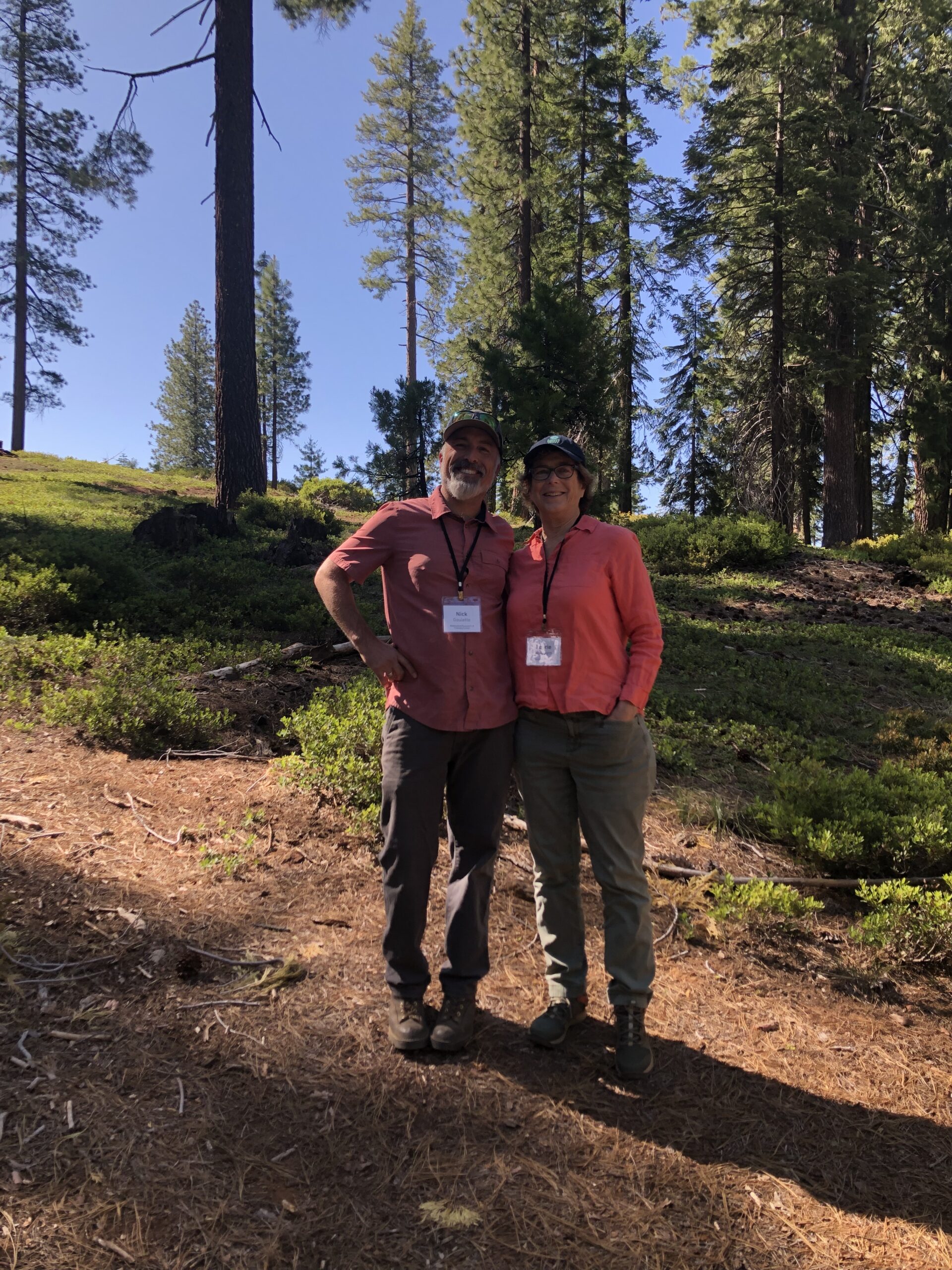
WRTC’s Nick Goulette with PFT’s Laurie Wayburn.
The Trinity Headwaters property, located where the Klamath Mountains meet the Southern Cascades, lies within one of the most biologically diverse regions in North America. The property contains rich mixed-conifer forests, wet meadows, springs, lakes, and more than 50 miles of spring-fed streams—including 4.5 miles of the Trinity River—that flow into the federal Central Valley Project, supporting California’s agricultural and some urban water supply.
The $15.5 million conservation effort was made possible through generous support from the Wildlife Conservation Board, Sierra Nevada Conservancy, and the U.S. Department of Housing and Urban Development—its first-ever grant for a conservation project, made possible by Congressman Jared Huffman. “The Trinity Headwaters project is a novel initiative that will have both ecological and community benefits, bolstering the local economy,” said Congressman Huffman.
This milestone strengthens the growing network of protected headwaters forests in the Klamath-Cascade region and advances California’s 30×30 goals, protecting critical habitat for nearly 250 species—some found nowhere else on Earth.
Thanks to everyone who made this conservation achievement possible—and to those who came out on the property to celebrate it with us!
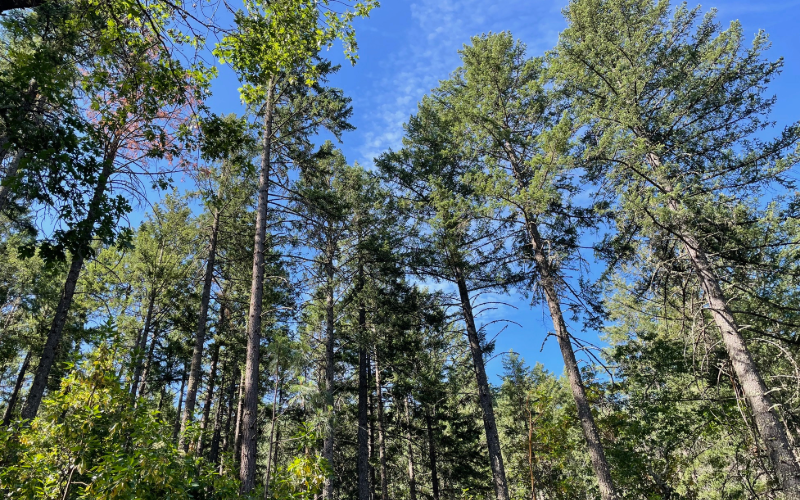
Forty years ago, Bill and Sarah Epstein took on a remarkable challenge: restoring a very productive but neglected 420-acre forest of great diversity directly abutting the City of Ashland, Oregon. Situated in the Clay Creek watershed, this property represents a remarkable model of ecological forestry in this fire adapted ecosystem. Like the nearby Willow-Witt Ranch, this property is part of a vital conservation corridor and buffer for the Cascade-Siskiyou National Monument—a region recognized for its globally significant biodiversity.
Bill and Sarah Epstein purchased the property in 1986 and began their restoration journey two years later, working closely with forester Marty Main to develop a comprehensive stewardship plan. Their approach has focused on restoring the land’s ecological health while simultaneously reducing wildfire risk—a critical concern in this fire-adapted ecosystem—and indeed, reintroducing fire as a management tool!
The property showcases a rich mosaic of mixed-species, multi-aged plant communities, including native chapparal and mixed conifer/hardwood forests. Through careful management, the Epsteins have implemented eight timber harvests using eight different harvesting systems, each matched to the land’s specific needs. They’ve planted over 26,000 seedlings, conducted prescribed underburns, and restored riparian buffers with good canopy cover along Clay Creek to protect valuable habitat and aquatic values.
The Epsteins have been pioneers in collaborative forest management, participating in the first collaboratively produced coordinated forest resource management plan in southern Oregon in 1993. Their property connects with lands managed by the US Forest Service and the City of Ashland, creating vital ecological corridors that allow plants and animals to adapt to climate change pressures, and also providing for several trails for public recreation. It also forms a much-needed buffer for potential fire spread in the region, as well as marking an effective stop to further development in the Wildlands Urban Interface (WUI)
Conserving this property is another critical step in building a resilient, interconnected landscape in this ecologically significant region of southern Oregon, where the mosaic of private and public lands poses challenges to habitat continuity. And, it will ensure that cold, clean water continues flowing into the Rogue watershed, benefiting fish, wildlife, and downstream communities. The Epstein property represents not just a model of ecological forestry, but a testament to how dedicated stewardship can restore and protect our precious forest ecosystems. PFT is honored to work with Bill and Sarah to protect their legacy of ecological forest management and safeguard this forest’s environmental and community values for future generations.
Please consider a donation to the Pacific Forest Trust. Your help—in all capacities—makes our work possible. Thanks for supporting us as we support forests!
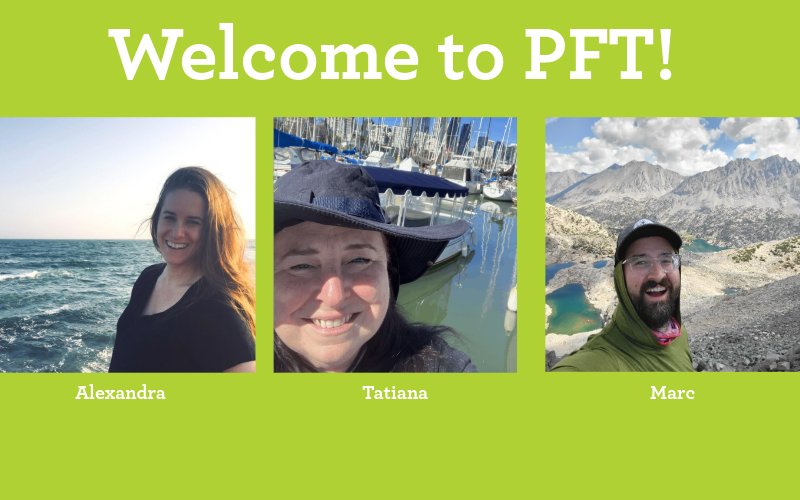
Pacific Forest Trust is growing! As we rise to meet the moment—when bold climate action, forest resilience, and conservation leadership are more urgent than ever—we’re excited to welcome three new team members who bring deep expertise and shared passion for our mission.
Tatiana Tilley joins us as PFT’s first-ever Chief Operating Officer. With over 25 years of nonprofit leadership in operations, finance, HR, and governance, Tatiana brings a wealth of experience in building inclusive, mission-aligned systems that support lasting impact. Her career has spanned continents—from teaching in Japan to protecting rainforest headwaters in Ecuador—and her values-driven leadership is matched by a deep commitment to climate justice, LGBTQ+ rights, and collaboration.
Marc Hudson, our new Conservation Director, brings nearly two decades of experience in land conservation, with a specialty in conservation finance and planning. Having worked at land trusts across the country, Marc has led hundreds of land and easement transactions and is always eager to explore the evolving intersections between conservation and community. His practical know-how, strategic thinking, and love of the outdoors make him a vital addition to our team.
Alexandra Coughlin joins as Executive Assistant, supporting PFT’s leadership with a strong background in organizational sustainability. A recent graduate of Malmö University in Sweden, Alexandra combines a global perspective with hands-on experience in strategic operations and philanthropic networks. Her passion for ecosystem restoration and biodiversity aligns beautifully with PFT’s mission and future.
Please join us in welcoming Tatiana, Marc, and Alexandra! Their unique talents and shared commitment to protecting forests for all will help propel Pacific Forest Trust’s work to new heights.
ICYMI
In case you missed it (ICYMI), here are some other exciting things PFT has been involved in lately!
- In a new Sacramento Bee op-ed, PFT President Laurie Wayburn makes the case for a bipartisan amendment to the Forest Legacy Program that would cut red tape, expand landowner options, and help trusted partners like PFT do even more to protect forests and communities.