FOREST FLASH
July 2025
In Pacific Forest Trust’s e-newsletter, Forest Flash, we send you the most recent PFT news and updates on forests, clean water, climate, and wildlife. Subscribe here.
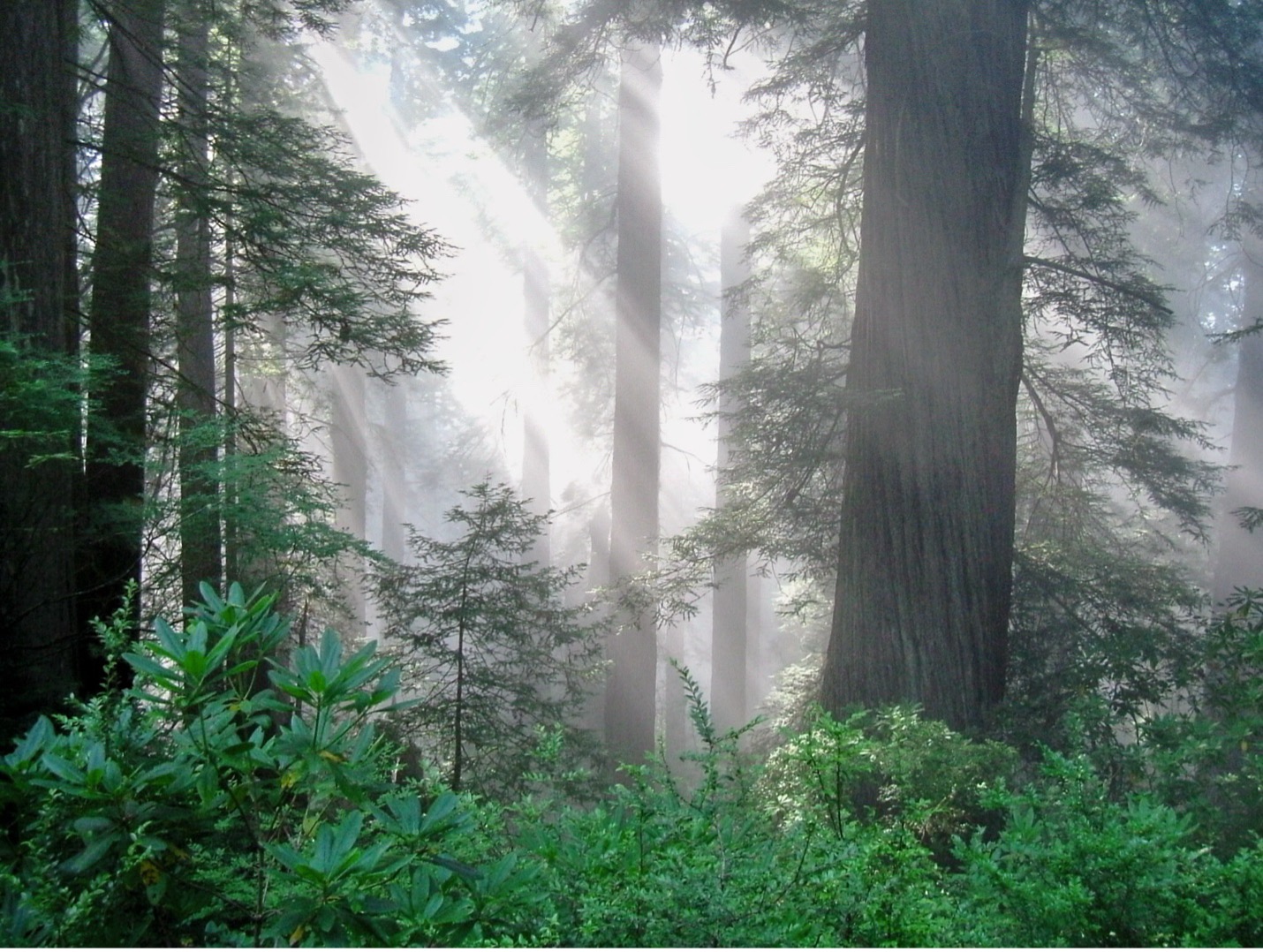
Even as California in facing increasing impacts of climate change on the ground, it is also in an intense policy discussion to reauthorize its pioneering climate policy and the Cap and Invest program. Addressing both of these issues is a groundbreaking new tool which offers unprecedented potential to rapidly and affordably scale up carbon emissions reduction while restoring and protecting vital ecosystems. Following the Administration’s targets for leveraging the climate healing powers of forests and other ecosystems, Nature Based Climate Credits (NBCCs) represent a powerful, cost-effective alternative that could revolutionize how we address climate change through natural and working conservation.
Unlike traditional carbon offsets, NBCCs work through permanent conservation easements that deliver comprehensive environmental benefits beyond carbon storage alone. These easements drive changes in forest and land management that restore and protect watersheds, biodiversity, and ecosystem sustainability while achieving carbon mitigation at just $10-15 per ton.
The numbers are staggering. California’s 12 million acres of privately owned conifer forests present an enormous opportunity, with less than 5% currently conserved. Working Forest Conservation Easements on just a fraction of this land could generate 150-300 million metric tons of CO2 equivalent over the next decade while keeping forests in productive timber use.
Real examples demonstrate the program’s transformative potential. A single 2,200-acre redwood restoration project provides 250,000 tons of immediate carbon storage and 500,000 tons over 100 years, while supporting spotted owls and salmon habitat. Similarly, a 12,800-acre ponderosa pine easement nearly doubles carbon stocks from 2 million to 3.8 million tons while protecting endangered species and California’s coldest, cleanest water sources.
With state-approved appraisal processes already in place and accredited land trusts managing maintenance, NBCCs offer a scalable, permanent solution that strengthens California’s climate resilience while supporting local economies and protecting our natural heritage for future generations, serving as a cost control mechanism and providing a complementary approach to offsets with broader public benefits.
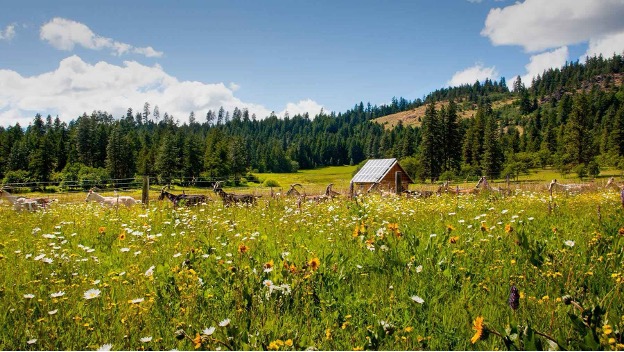
On a bright morning in early June, Pacific Forest Trust joined partners and stakeholders for a tour of the Willow-Witt Ranch—450 acres of well-managed conifer forest, mountain meadows, wetlands, and organic farmland bordering the Cascade Siskiyou National Monument in Oregon. The diverse stakeholders were inspired by the goal of conservation of this ecologically significant landscape and represented the wide array of constituencies that value and benefit from Willow Witt.
Representatives from the Oregon Department of Fish and Wildlife, NRCS, the Oregon Watershed Enhancement Board and the Confederated Tribes of Grand Ronde were on hand to explore the ranch’s abundant resources and discuss opportunities for conservation. All expressed strong enthusiasm and the Grand Ronde delegation voiced deep interest in the site’s cultural and ecological potential.
Owned by Suzanne Willow and the late Lanita Witt since 1985, the ranch exemplifies long-term, resilient forest stewardship. Working with forest manager Marty Main, Willow and Witt rehabilitated degraded lands into a mosaic of thriving ecosystems. The property also houses a children’s summer camp—complete with ADA-accessible bunkhouses and trails—and a green burial site, as well as serving as a source for the local organic farms, reflecting the owners’ commitment to inclusion and community.
The ranch sits at the headwaters of Frog and Babe Creeks, adjacent to the Cascade-Siskiyou National Monument. Its conservation adds a critical puzzle piece to the broader Klamath-Cascade connectivity corridor that Pacific Forest Trust has championed for decades. In a region facing increasing climate threats, Willow-Witt stands as a model of working lands that sustain biodiversity, community, and culture.
As Suzanne carries on this legacy, the Willow-Witt Ranch is poised to join a network of conserved, well managed private forest lands helping to ensure the connectivity of habitats with the CSNM and the regions extraordinary biodiversity. Through collaboration, we are building more than a conservation easement—we’re protecting a way of life.
Please consider a donation to the Pacific Forest Trust. Your help—in all capacities—makes our work possible. Thanks for supporting us as we support forests!
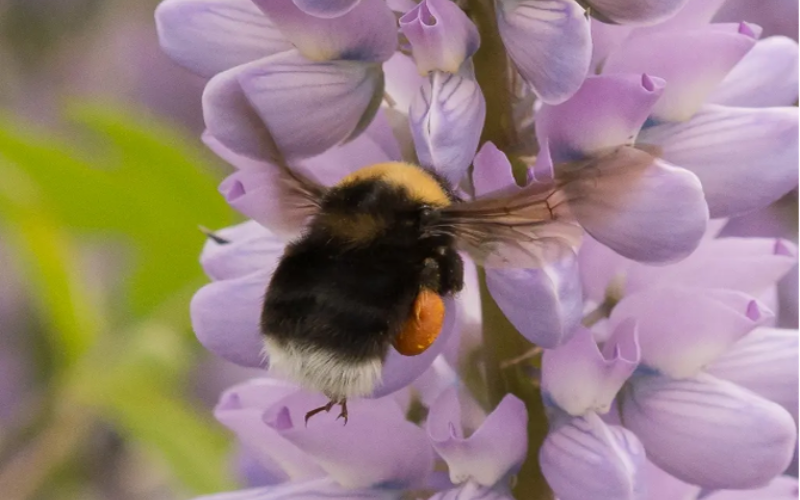
This July, Pacific Forest Trust partnered with the U.S. Fish and Wildlife Service, Pollinator Project Rogue Valley, the Selberg Institute, Oregon Bee Atlas, Vesper Meadow, and others for the annual search for the elusive Franklin’s bumblebee (Bombus franklini) an endangered species, on Mt. Ashland, the highest peak in the Siskiyou Mountains of southern Oregon. Last seen in 2006, Franklin’s bumblebee was once found in areas across southern Oregon and northern California, with Mt. Ashland at its center. Although Franklin’s bumblebee has not been documented as present in the last years, this annual survey plays a vital role in monitoring the health of higher-elevation pollinator habitats, presence opf other threatened pollinators and native bees, and improving our understanding of habitat conditions within its historic range.
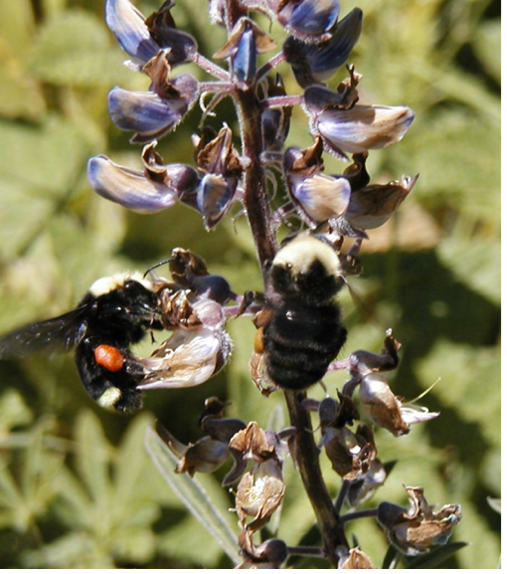
Franklin’s bumblebee at right, Yellow-faced bumblebee at left, foraging on lupine at Mt Ashland, photo: Brendan White, USFWS.
This year, PFT’s Stewardship and Outreach Associate, Lyndia Hammer, joined Oregon Bee Atlas’ Lincoln Best to expand the search by exploring Mount Ashland Demonstration Forest (MADF)—PFT’s 1,130-acre forest—looking specifically for native bees. MADF supports a thriving population of favorite flowering plant of Franklin’s bumblebee, horsemint (Agastache), alongside a diverse array of other flowering plants. During their survey, the team identified multiple native bumblebee species, including Yellow Head (Bombus flavifrons), Two-Form (B. vancouverensis), and Yellow-Faced (B. vosnesenskii), as well as cuckoo bumblebees, miner bees, mason bees, pollen wasps, and a Campanula specialist bee found sleeping on a fleabane flower.
This initial survey is just the beginning. With ongoing support from Pollinator Project Rogue Valley and the Oregon Bee Atlas, PFT is developing a comprehensive pollinator species inventory for MADF. This is a crucial step in understanding how this forest—which connects a significant network of protected lands, including the Cascade-Siskiyou National Monument, Mountcrest Forest, and Rogue River–Siskiyou National Forest—can help support species recovery and resilience.

As July draws to a close, we bid farewell to Xander Starobin, whose dedication and passion have made a lasting impact on us! In his internship, Xander spearheaded outreach and advocacy for the Forest Legacy Management Flexibility Act (H.R. 2771), connecting with nearly 200 land trusts across the country to build support for this crucial legislation that would allow accredited land trusts to hold conservation interests acquired through the USFS Forest Legacy Program.
Xander developed comprehensive informational materials, crafted template letters for congressional outreach, and gathered compelling anecdotes from land trusts nationwide to demonstrate the amendment’s potential impact.
A rising junior at Wesleyan University majoring in Government and Environmental Studies, Xander has a passion for hands-on environmental work. When not immersed in conservation, he can be found leading bluegrass and funk bands at school, playing banjo and guitar, hiking, or exploring world cuisines in the kitchen.
Thank you, Xander, for bringing such thoughtful energy and genuine passion to our mission. Your work this summer has strengthened private forest conservation efforts nationwide, and we’re excited to see where your environmental advocacy takes you next.
ICYMI
In case you missed it (ICYMI), here are some other exciting things PFT has been involved in lately!
- The Summer 2025 issue of ForestLife, our bi-annual print newsletter, has reached mailboxes and is now online in full, too? Read all about it here.