January 2026
In Pacific Forest Trust’s e-newsletter, Forest Flash, we send you the most recent PFT news and updates on forests, clean water, climate, and wildlife. Subscribe here.
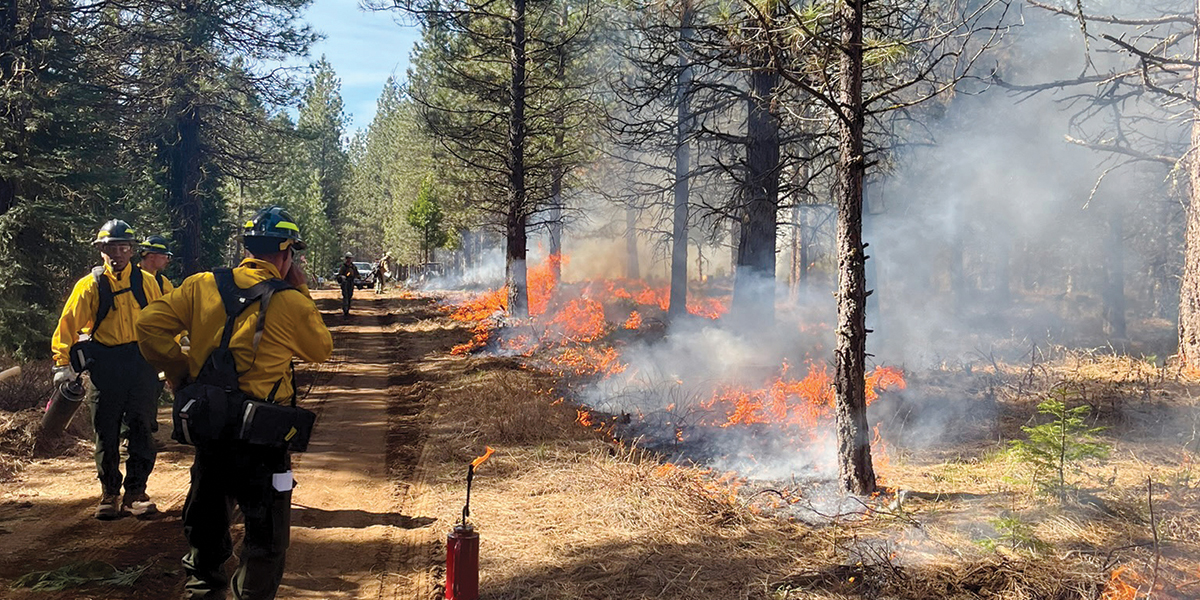
With steady progress facilitating the use of prescribed fire over the past decade, California is now poised to further expand its use through policy changes to remove key barriers that have prevented widespread application of beneficial fire management practices. Pacific Forest Trust has been developing this proposal in close collaboration with prescribed and cultural fire practitioners and Assemblyman Chris Rogers who represents the North Coast from Santa Rosa to Oregon. Indigenous fire management practices underlie many of the recommendations underpinning a forthcoming legislative proposal.
Decades of fire suppression on top of significantly simplified overstocked forests have led to unnaturally dense forests dangerously loaded with fuel. Prescribed fire—intentional, controlled burning often following thinning—offers one of our best tools for reducing catastrophic wildfire risk while restoring ecological health. However, bottlenecks over mutual recognition of state and federal burn credentials, liability concerns, and operational restrictions have limited our capacity to implement this essential practice at scale.
Our proposed policy tackles these obstacles head-on, recommending state and federal credential reciprocity so experienced federal and CAL FIRE practitioners can transfer existing qualifications rather than starting over. We also recommend enacting annual recertification requirements of three-year intervals, rather than an annual requirement, while maintaining safety standards. Another recommendation is to make California’s pioneering Prescribed Fire Liability Claims Fund permanent, providing long-term assurance for landowners and practitioners.
Overall, these changes will further move the state towards actively using fire as a landscape and forest management tool to reduce risk and increase ecological resilience, not suppressing it, which has unintentionally led to an increase in catastrophic fire risk. We applaud Assemblymember Roger’s leadership in this arena, making California safer and more resilient.
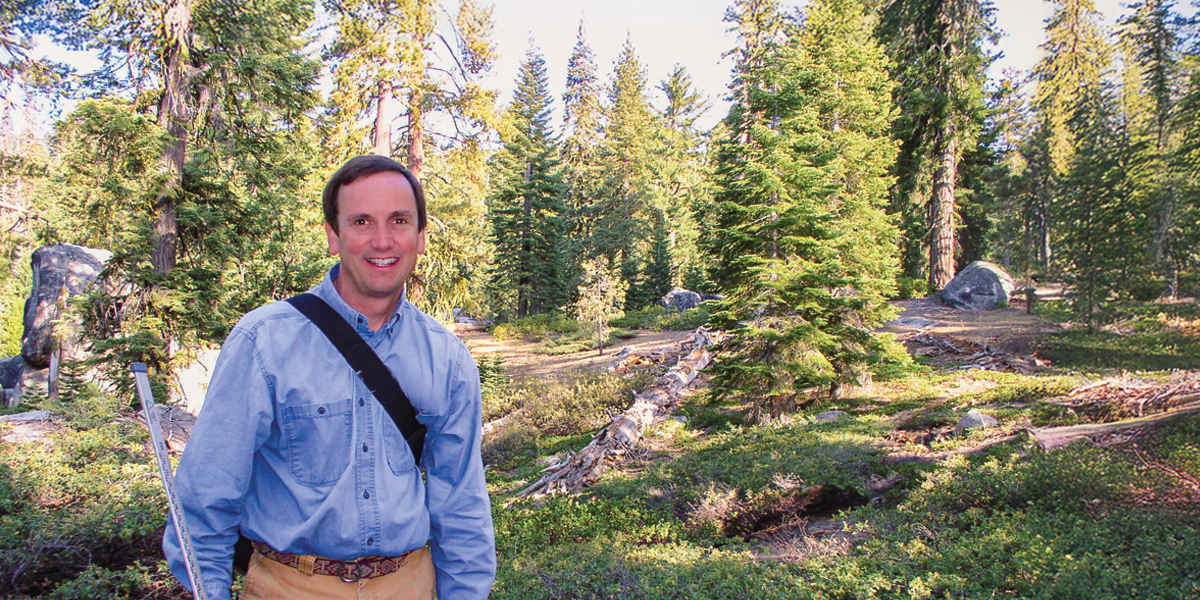
Pacific Forest Trust is delighted to welcome Dr. Malcolm P. North to our Board of Directors. Dr. North is a Research Ecologist with the USFS Pacific Southwest Research Station and Affiliate Professor of Forest Ecology at UC Davis. A preeminent authority on interior forests of California and the West, he brings deep expertise in fire regimes, understanding of the impacts of forest management on ecosystem health and wildlife habitat, and management strategies to improve forest resilience to changing fire regimes and climate conditions. Dr. North is a leading advisor to state and federal government agencies on forest function, fire management, and forest silviculture. He is the lead architect of the research program at the Teakettle Experimental Forest.
Dr. North received his Master of Forest Science at Yale University and his PhD in Forest Ecology from the University of Washington under PFT Board Member Emeritus and Chief Science Advisor, Dr. Jerry Franklin. With 30 years as a researcher in forestry and over 200 scientific publications, Dr. North will be instrumental in advising us in multiple aspects of our work, from research and policy to practice on the ground.
“I look forward to working with the PFT Board and its partners to further their innovative forests stewardship model and the work for which PFT is widely admired.”
We are proud to have collaborated with Dr. North on a number of policy initiatives, from enhancing watershed function to promoting more beneficial fire regimes and look forward to expanding this collaboration in the forest. Please join us in welcoming Malcolm to PFT’s Board!

Last year, PFT began conversations with the Timber Rings Tree Company (TRTC) about conserving their 3,100 acres of mixed conifer forest in the headwaters of Evans Creek, in Southern Oregon. Evans Creek is an important salmon and steelhead spawning stream that drains into the Rogue River and has recently been the focus of several small dam removals to improve its habitat. It provides spawning and rearing habitat for fall Chinook salmon, summer and winter steelhead, cutthroat trout, Klamath smallscale suckers, and Pacific lamprey—all vulnerable species. We are delighted to announce that the TRTC has now agreed to work with us to conserve this productive and ecologically diverse forest with a Working Forest Conservation Easement.
Mixed pine, oak, madrone, Douglas fir on the Evans Creek property.
The 3,100 acre property supports mixed conifer hardwood forest, oak pine woodland, oak chaparral, and significant riparian habitats including the headwaters of several small tributary streams to Evans Creek. Conserving this well-managed forest will protect headwater streams to ensure cold clean water flow to Evans Creek and thence to the Rogue River below.
In addition to well stocked young pine plantations, the property has significant riparian areas with bigleaf maple, Oregon ash, willow, cottonwood, and a host of riparian associated trees and shrubs. Additionally, a highly biodiverse plant community with Oregon white oak, California black oak, ponderosa pine, and chaparral, which support a great diversity of birds, mammals and insect, in addition to its major fish resources. Oak chaparral communities are known to host over 300 vertebrate species and hundreds of butterflies, moths, and other oak specialist insects.
This expansive private property straddles a long north-south running ridge between the towns of Rogue River and Wimer. Thinning for climate resilient forest management and reintroduction of prescribed fire would reduce fire risk for surrounding rural communities including Wimer, Rogue River, Sams Valley and Grants Pass. We are delighted that the TRTC is moving ahead to protect this productive and diverse forest system, ensuring that it is well-managed and resilient for generations to come.
ICYMI
In case you missed it (ICYMI), here are some other exciting things PFT has been involved in lately!
- In December, PFT completed a historic landback project with the Southern Sierra Miwuk Nation. Explore the extensive media coverage here.
- Mongabay recently featured some of our applied science work in restoring the canopy layer in redwood forests, and why it is important.
- We’re hiring! If you love forests and have experience in natural resource management, project coordination, or conservation acquisitions, check out our current job openings.