
December 2025
In Pacific Forest Trust’s e-newsletter, Forest Flash, we send you the most recent PFT news and updates on forests, clean water, climate, and wildlife. Subscribe here.
Year in Review
What an extraordinary year 2025 has been for Pacific Forest Trust! We’ve achieved transformative conservation milestones, advanced groundbreaking climate policy, deepened our restoration work, and strengthened connections with communities and future stewards. Your unwavering support has been essential to every success.
Below are highlights of our 2025 achievements, with signs of even greater impacts ahead!
Conservation Achievements
Securing vital landscapes, expanding protection
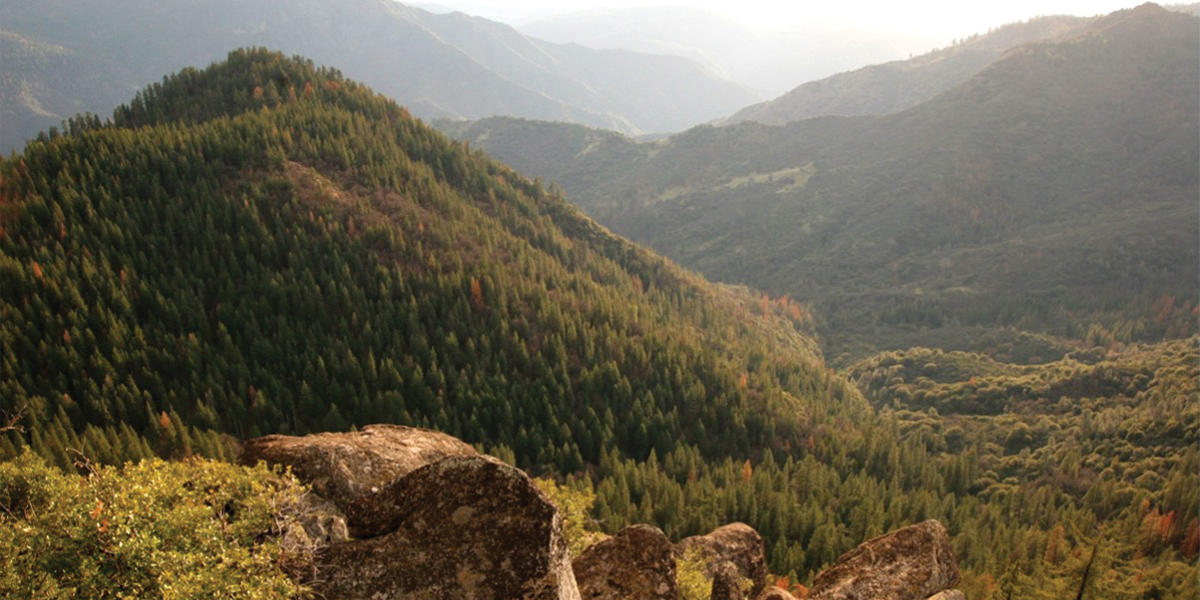

Strategic management means healthy trees on the Epstein Family Forest
In Oregon, we advanced conservation of two ecologically critical properties. The Epstein Family Forest—420 acres bordering Ashland—showcases four decades of exemplary restoration by Bill and Sarah Epstein, including prescribed burns, strategic harvests, and 26,000 planted seedlings. This property creates vital connectivity between public lands and serves as a buffer for wildfire protection. We also made significant progress conserving Willow-Witt Ranch, 450 acres of diverse forest, meadows, and organic farmland bordering the Cascade-Siskiyou National Monument. A June stakeholder tour—including representatives from the Oregon Department of Fish and Wildlife, NRCS, and the Confederated Tribes of Grand Ronde—generated tremendous enthusiasm for permanently protecting this model of resilient land stewardship.
On California’s North Coast, we’re working to permanently conserve the spectacular Adanac Ranch—over 13,000 acres bridging the Sinkyone Wilderness to Island Mountain. With frontage on the Wild and Scenic Eel River and over 50 miles of streams supporting threatened salmon, this property is home to both Roosevelt and Tule elk—a rare, shared habitat. Conservation will ensure this landscape remains a working forest while providing public access along the Great Redwood Trail.
Perpetual Stewardship
Restoring ecosystems, building resilience
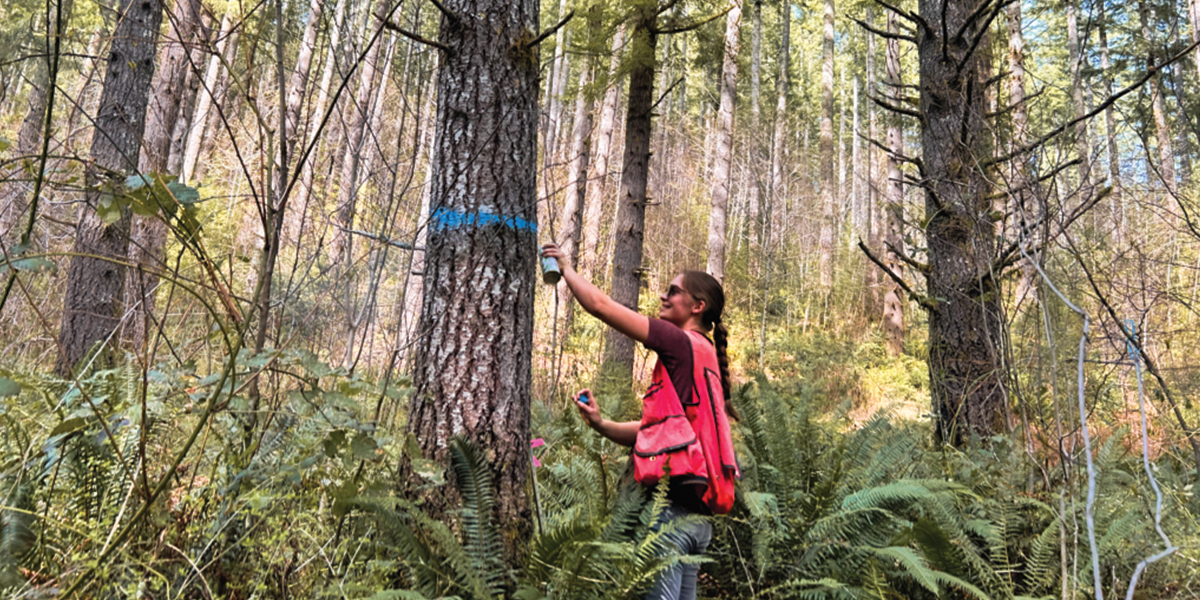
At the van Eck Oregon Forest, our 25-year commitment to watershed restoration continues to yield remarkable results. This year we completed stream restoration on Sugarbowl and Big Elk Creeks—critical spawning grounds for threatened Oregon Coast coho salmon—using large wood placements and riparian plantings. We’re developing the Wright Creek Restoration Plan to enhance riparian and wetland habitats for beaver and coastal giant salamanders, with plans to reintroduce beavers in coming years. We’re also restoring tidal wetlands in partnership with MidCoast Watersheds Council and The Wetlands Conservancy—ecosystems that have declined by over 95% across Oregon. In February, we planted nearly 30,000 seedlings across 89 acres, reintroducing western hemlock, western red cedar, Sitka spruce, and grand fir to create diverse, climate-resilient forests better prepared for longer, hotter, drier summers.
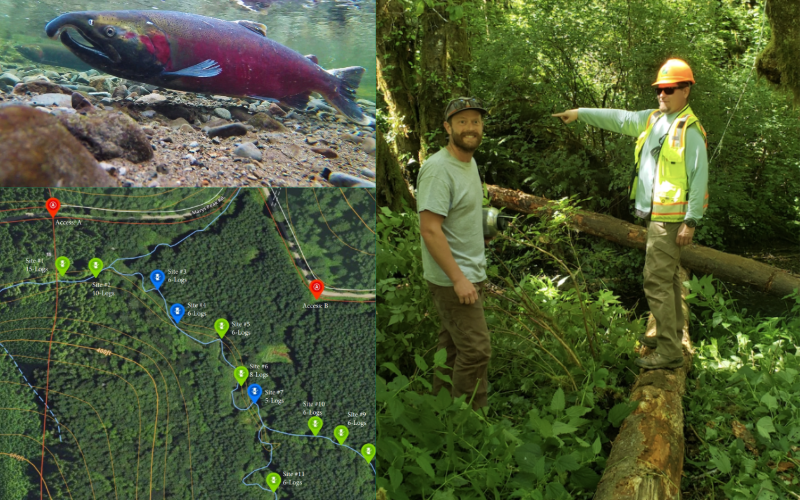
Along with our partners, we’ve restored parts of Sugarbowl and Big Elk Creeks on van Eck Oregon
At van Eck California, we restored a critical 800-foot oxbow on Lindsay Creek, one of the Mad River’s most important salmon tributaries. Years in the making and funded by the California Department of Fish and Wildlife, the project reconnected off-channel habitat by installing a large arched culvert and placing 60 large spruce trees to create winter refugia for threatened coho salmon. Wildlife monitoring confirms the forest is thriving; recent observations captured spawning Chinook salmon, black bears with cubs, elk calves, and Pacific giant salamanders, all completing life cycles in this recovering landscape.
At McCloud Soda Springs Working Forest, we continued our multi-year prescribed burn program with 440 acres burned in April, building on 2024’s nearly 750-acre burn. Once complete, it will be one of the largest prescribed burns on private commercial forestland in California in over two decades. This work reduces hazardous fuels, creates defensible space for the adjacent town of McCloud, and can reduce catastrophic fire risk by up to 75%. Our educational video series continues to serve as a valuable resource for landowners interested in “good fire.”
We’re also pioneering innovative restoration techniques. At van Eck California, we’re continuing our years-long work with Dr. Stephen Sillett of Cal Poly Humboldt to reestablish canopy fern mats in young redwood forests. The mats are vital components that harbor biodiversity, collect and filter water, and support long-term forest resilience. After several years, ferns planted across 15 trees continue growing and sporing, gradually integrating with their host trees.
Policy to Move Us Forward
Leading innovation in climate and conservation policy
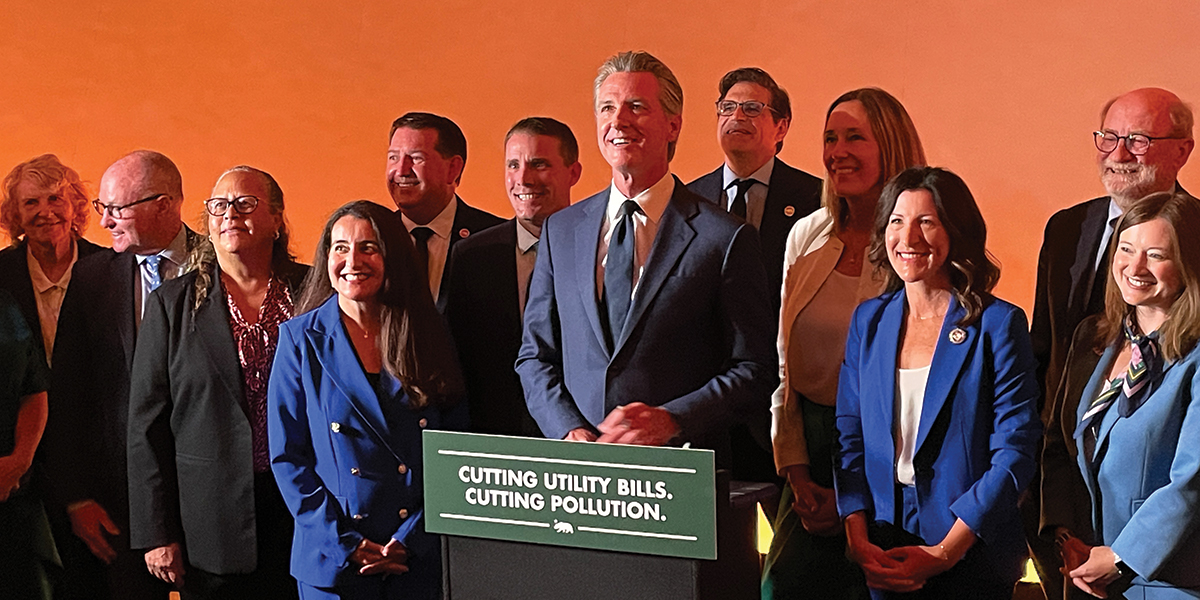
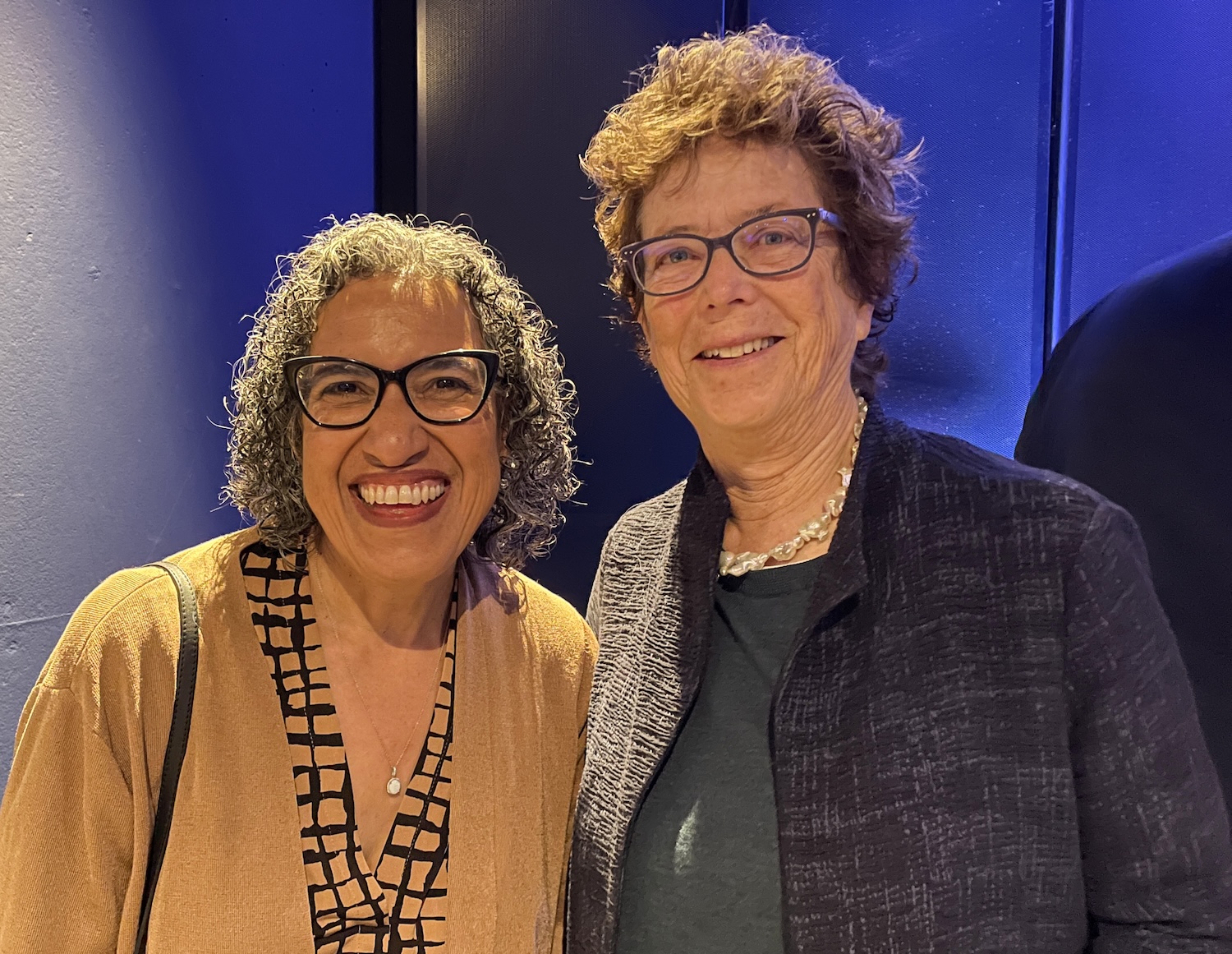
PFT’s Laurie Wayburn (right) with former CARB chair, Liane M. Randolph, who led CARB through this legislation
In September, Governor Newsom signed a suite of climate legislation, including SB 840 (Limón), extending California’s Cap-and-Invest program and directing the California Air Resources Board to develop alternative in-state offset mechanisms that support nature-based climate targets and 30×30 conservation goals. PFT attended the signing ceremony to celebrate our efforts to develop and advance Nature-Based Climate Credits (NBCCs), a groundbreaking tool that delivers permanent conservation through working forest conservation easements while generating measurable carbon reductions at just $10-15 per ton. Unlike traditional offsets, NBCCs provide comprehensive benefits: wildfire resilience, protected water supplies, preserved habitat, and secure rural jobs. Conserving even a fraction of California’s 12+ million acres of private conifer forests could yield 150-300 million tons of carbon storage in the next decade.
At the federal level, we continued advocating for the Forest Legacy Management Flexibility Act (H.R. 9602), which expands public-private conservation partnerships by allowing accredited land trusts to hold conservation easements.
In Oregon, we lent our support to a growing number of conservation investments across multiple programs, including the Natural and Working Lands Fund, Oregon Conservation and Recreation Fund, and Private Forest Accord Grant Program. We recognize that sustained funding is vital for watershed health, forest resilience, and sustainable agriculture, and will continue to advocate for such funding in the years ahead.
Community Connections
Building the next generation of forest stewards
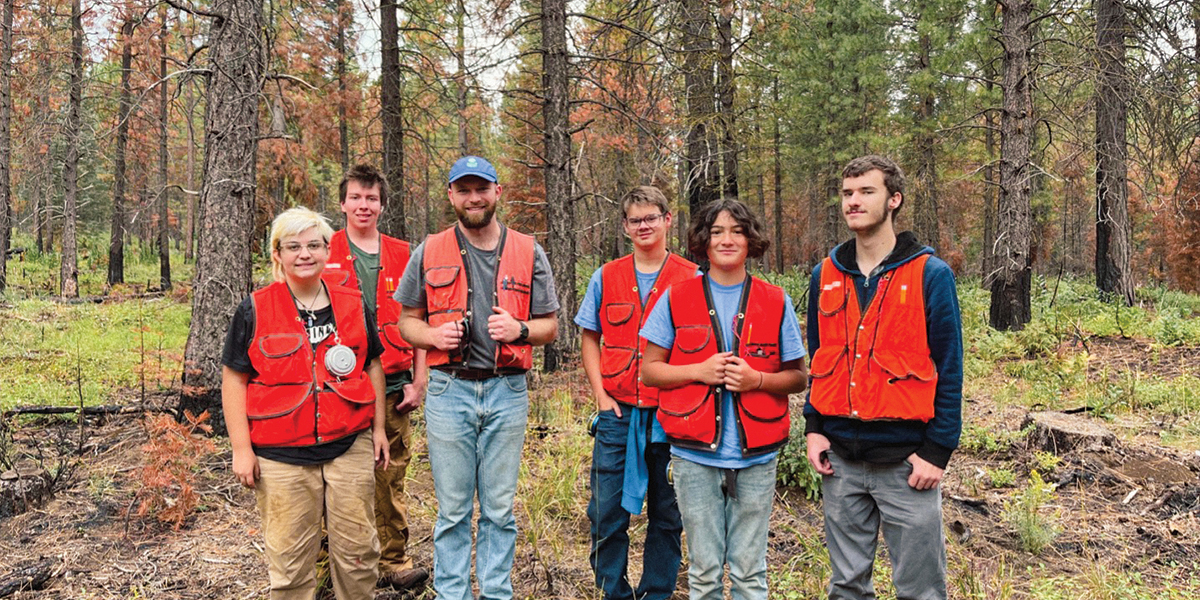
Our Mount Ashland Demonstration Forest (MADF), in southern Oregon, continues to serve as a dynamic outdoor classroom. Thanks to a grant from Jackson Soil and Water Conservation District, we enhanced educational programming with interpretive signage, tailored learning materials, and community workshops. This year, through school outings and public events, those in the greater Ashland area were able to learn more about climate-resilient forest restoration, fire ecology, and biodiversity.
Meanwhile, in California this fall, McCloud High School’s Forestry Class visited McCloud Soda Springs Working Forest for hands-on learning: measuring trees, practicing silviculture techniques, and meeting Terra Fuego Resource Foundation’s prescribed burn crews. These experiences complement MADF programs and inspire students to consider careers in natural resource management.
We also hosted and participated in the Cascade-Klamath-Siskiyou Connectivity Symposium at Southern Oregon University, uniting scientists, land managers, and advocates to address habitat fragmentation. As founding members of the Southern Oregon Wildlife Crossing Coalition, we are championing the proposed I-5 wildlife overpass—critical for reconnecting this globally significant biodiversity hotspot. With broad bipartisan support, including Congressman Cliff Bentz and Senators Jeff Merkley and Ron Wyden, we are hopeful the project will move forward in 2025.
As we look ahead to 2026, we’re inspired by the progress we’ve made and the partnerships that drive our work. Thank you for taking part in this journey. Together, we are ensuring a future where forests and people thrive.

ICYMI
In case you missed it (ICYMI), here are highlights from PFT’s year in media exposure!
- PFT President Laurie Wayburn’s TEDx Boston talk, Can We Have Our Forests and Harvest Them Too?, is now available to watch online! In her talk, Laurie explores the vision of a managed “working forest,” which not only provides timber products but also restores and protects watersheds, wildlife habitats for vanishing species, and a healthier climate. Pacific Forest Trust has executed this vision for over 30 years, and across tens of thousands of acres of forest.
- Laurie Wayburn’s op-ed in Governing, a magazine for policymakers at the local, state, national, and international levels, highlights why we need to manage forests (and other natural systems) for older, more natural conditions.
- We were also pleased to help support the excellent work done by California’s state administration in expanding good fire management with a story in Politico, quoting PFT’s Paul Mason.
- Redwoods stole the show on Broadway, but their real-life canopies are vanishing. In this Common Dreams op-ed, PFT President Laurie Wayburn reflects on the cultural and ecological significance of these mighty trees vis-à-vis the Idina Menzel-led smash hit.
- In this Arbor Day op-ed for The Fulcrum, PFT President Laurie Wayburn lays out why conserving and restoring existing forests is one of the smartest investments we can make for water security, climate resilience, and community survival.
- In a Sacramento Bee op-ed, PFT President Laurie Wayburn makes the case for a bipartisan amendment to the Forest Legacy Program that would cut red tape, expand landowner options, and help trusted partners like PFT further strengthen efforts to protect forests and communities.
- PFT President Laurie Wayburn authors a Capitol Weekly op-ed urging lawmakers to adopt Nature-Based Climate Credits as a cost-effective, California-focused solution in the cap-and-trade reauthorization debate.
- News of PFT’s transfer of land near Yosemite to the Southern Sierra Miwuk Nation was reported on widely, here are a few examples from SFGate, Outside, and the Mercury News.