
Forest Flash: May 2026
In Pacific Forest Trust’s e-newsletter, Forest Flash, we send you the most recent PFT news and updates on forests, clean water, climate, and wildlife. Subscribe here.

We are thrilled to share the news that the Oregon Watershed Enhancement Board (OWEB) has approved funding for the conservation of the Epstein Family Forest abutting the town of Ashland, Oregon. Bill and Sarah Epstein partnered with Pacific Forest Trust to ensure their forest remains protected and responsibly managed forever.
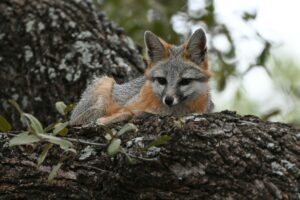
 This will permanently protect more than 400 acres of beautifully and lovingly restored diverse forest as well as critical springs, streams and riparian habitat for hundreds of species of birds, amphibians, and mammals. The property is home to over 16 listed species, from Pacific fisher to elusive ringtail cats to the fringed myotis and yellow legged frogs. It also provides a beautiful vista for hikers in the adjacent Rogue Siskiyou National Forest.
For the past 40 years, Bill and Sarah Epstein have been committed to restoring a biodiverse, fire-resilient, 405 acre forest in the Siskiyou Mountains. When they purchased the land in 1986, the forest was unhealthy after decades of high-grade logging that removed the best timber and left behind dense brush, diseased trees, and dangerous fuel loads.
As their knowledge grew, they learned that they were essentially living on a wildfire bomb. With the property in the heart of the wildlands urban interface (WUI), they understood how important it was to manage correctly to keep their, home, forest and the community safe.
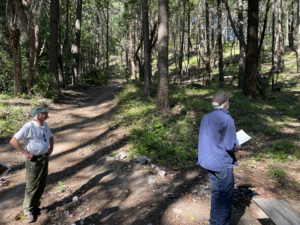 Their stewardship transformed the land. Working with reknowned forester Marty Main, they removed dead and dying trees and thinned out overcrowded monoculture, and created conditions for native conifers to thrive again. Today, the mostly late-successional forest is healthy and resilient.
The land also provides important benefits beyond its boundaries. Two creeks on the property, Clay and Hamilton Creeks, contribute to the Ashland watershed, and a network of trails support local recreation. The Epsteins have stewarded a local treasure—even earning them recognition as Forest Owner of the Year.
We’re celebrating this win alongside the Epsteins, the Ashland community, and the many species that depend on this remarkable landscape. This project is a powerful example of why Pacific Forest Trust’s work, and your support, matters.
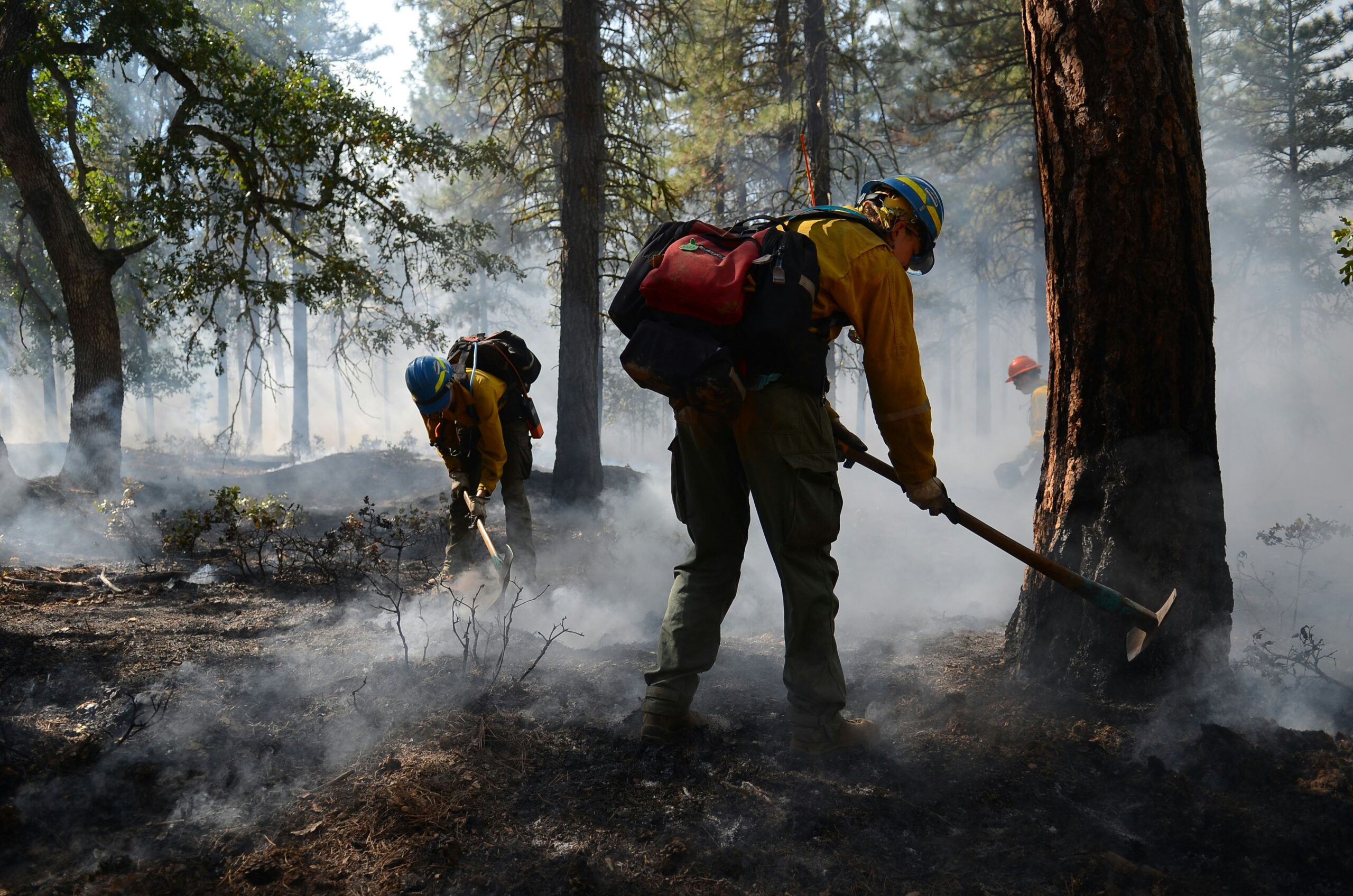
The Governor’s “May Revise” budget was released this month and it poses real threats to both our forest’s health and fire resiience as well as for conservation overall. But, there is also some good news.
 First, the good news for conservation: voter-approved Proposition 4, the $10 billion climate bond, is delivering real money for forests and conservation. The Governor’s January budget proposed $314 million for wildfire and forest resilience in 2026-27, alongside $199 million for Biodiversity and Nature-Based Climate Solutions and $107 million for Coastal Resilience. These funds will directly advance conservation.
The harder news: bond money is one-time funding. Climate Bond allocations for wildfire prevention will only last another few years, federal support has declined, and state budget constraints are tightening.
The bad news: The Governor’s budget proposed eliminating hundreds of Natural Resource Agency positions that would undermine the very programs Proposition 4 is funding. At the Department of Fish and Wildlife, cuts would affect staff from game wardens to those who review and permit forest management and restoration, directly contravening the purpose of the “Penny a Board Foot” tax implemented to fund just such work. At State Parks, positions protecting environmental resources and addressing deferred maintenance are at risk, just as bond dollars arrive for those same purposes. PFT is urging the Legislature to restore these positions in the final June budget.
You can help by contacting you state legislators to urge them to keep this funding.
A Funding Cliff for Wildfire Programs
The situation is far worse for the vital work of restoring a safer fire context for all Californians just as we head into a major fire season, Every year since 2018, $200 million of Greenhouse Gas Reduction Fund (GGRF) revenue has supported CAL FIRE wildfire prevention programs, long treated as a top budget priority. Last year, SB 840 moved that funding to Tier 3 — the lowest priority— where it is now unlikely to be funded. The amendments to cap-and-invest regulations, which the California Air Resources Board just approved late Friday, will further cut GGRF revenues by roughly half and leave no ongoing funding for wildfire resilience programs.
PFT led a broad coalition — including the California Cattlemen’s Association, California Fire Safe Council, rural county representatives, and insurance industry groups — in urging Governor Newsom, Senate President Pro Tem Limón, and Assembly Speaker Rivas to restore the $200 million CAL FIRE wildfire allocation as “off the top” funding. This would secure nearly $4 billion for wildfire risk reduction over 20 years.
Contact your legislators to support restoring GGRF wildfire funding.
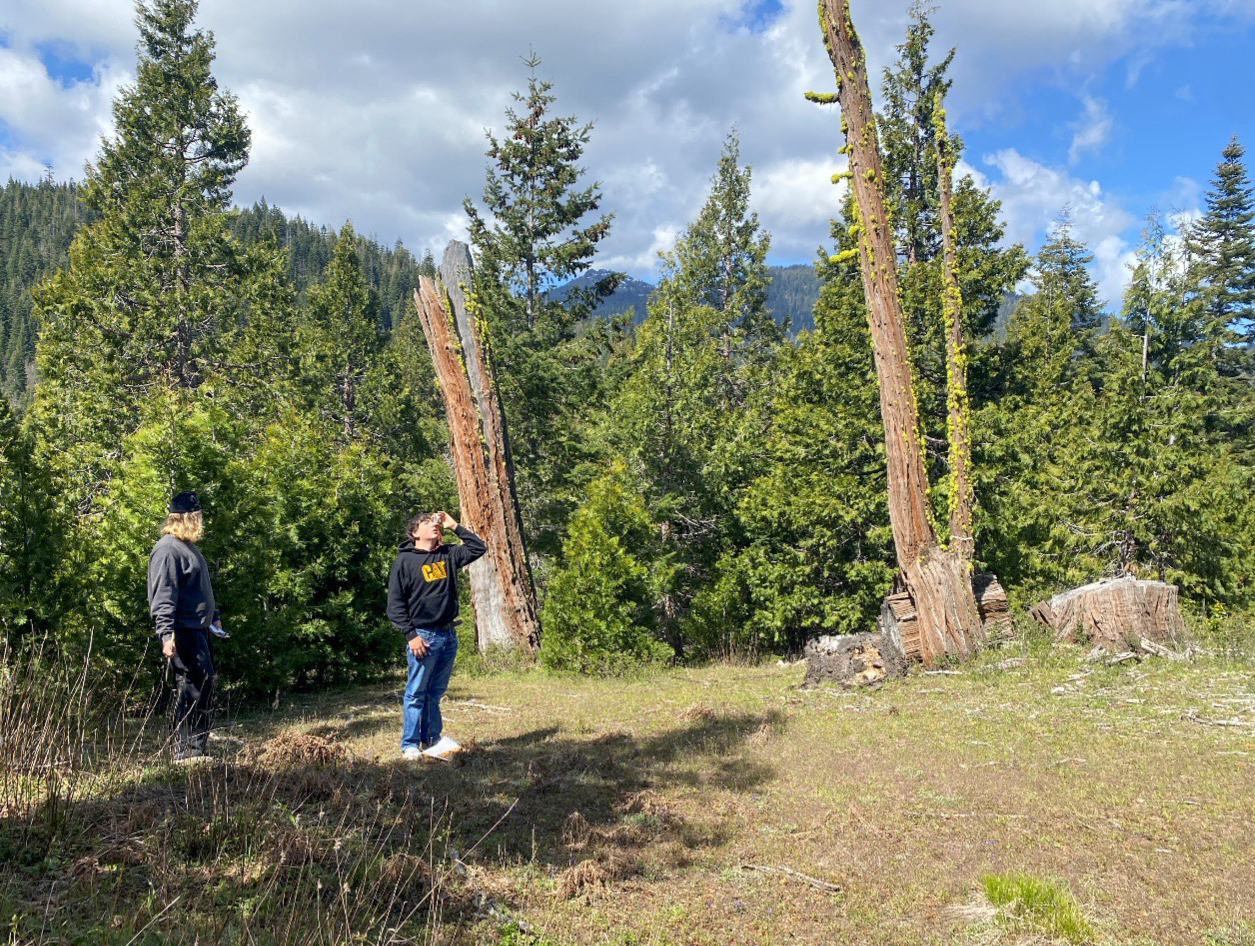
Spring has sprung up at our Mt Ashland Demonstration Forest (MADF). At 5,000+ feet in elevation, and on a wet, north-facing slope, spring comes a little later to MADF than to sites on the Rogue Valley floor. Visitors to the property in late April enjoyed iconic southern Oregon spring beauties such as morel mushrooms and trillium in bloom, and since then, a host of wildflowers and pollinators as well as many birds, have appeared as well.
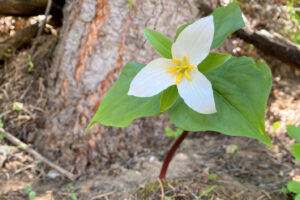 PFT has hosted 6 classes up at the MADF so far this school year, working with more than 150 students. Our goal is to introduce them to career options in restoration and climate-resilient forest management. We enhanced participants’ understanding of forest restoration and management through field visits focused on wildlife habitat observation, forest measurements, and restoration problem solving. Students get an opportunity to deepen their knowledge and appreciation of the plants and animals of their native forests and gain an awareness of the role they could have in stewarding future forests. For example, Sophomore and Junior students from a Forestry class visited in April to build upon their native plant identification skills, and practice tree measurements such as diameter, height, and volume calculations.
On a recent visit with AP Environmental Science students, we discussed how we are planning to reintroduce fuel loads on the forest, and engaged them in gathering data to help with preparation for a prescribed burn we are planning this fall. Here is what some of them shared with us after the had to say after the field trip to MADF:
“I appreciate what you guys do for the forest in our County and if the trees could speak they would express words of gratitude too. I loved being out in nature with my classmates and you guys made it possible so I’m eternally grateful!”
“ This was a very valuable experience and perspective.”
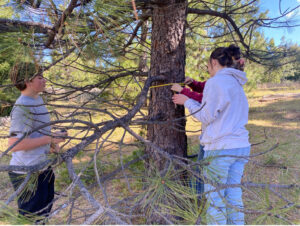 “Thank you so much for allowing our class to come and visit your work, while teaching us all that you hope to do in the forest to make it more resilient to future fires. I had a wonderful time getting to walk around and enjoy the scenery. I hope to one day go back and see what has changed.”
We’re grateful to be able to share our work with the community to help inspire the next generation.
If you’d like to support our work and the future of forest stewardship, please click the button below to donate.
ICYMI
In case you missed it (ICYMI), here are some other exciting things PFT has been involved in lately!
- Northwest Land Camp, the preeminent networking and training event for Northwest land trust leaders and conservation partners, is coming up from June 23-26, 2026 at the Florence Event Center in Florence, Oregon. Register to join 300 conservation professionals for 35+ peer-led workshops and panels that further the work of Northwest land trusts and conservationists. Our Stewardship and Outreach Associate, Lyndia Hammer, will be presenting about Strategies for Implementing Prescribed Fire on Land Trust Properties.
- On Arbor Day, Pacific Forest Trust President & co-founder Laurie Wayburn had an opinion piece published in The Progressive Perspectives and dozens of other outlets explaining why, and how, we can manage forests for their many benefits. Read the full article here.
- PFT president and co-founder Laurie Wayburn wrote an op-ed in response to a recent article about raising the height of Shasta Dam, explaining other forest-based solutions to water reform. Read more details here.
- A quote from Pacific Forest Trust was featured in the San Francisco Chronicle’s front-page story on California’s cap-and-invest overhaul, which may gut the fund that supports that state’s most critical wildfire, forest, and climate programs. Read the article here.
- We’re hiring! If you love forests and have experience in communications, fundraising or conservation project management, check out our current job openings.