
Forest Flash: June 2026
In Pacific Forest Trust’s e-newsletter, Forest Flash, we send you the most recent PFT news and updates on forests, clean water, climate, and wildlife. Subscribe here.

We’re excited to announce that at its May 28 meeting, the Wildlife Conservation Board approved a $1,991,000 grant to Pacific Forest Trust for the Fieldbrook Valley Redwood Restoration Project, part of the van Eck Forest in Humboldt County.
This grant will allow PFT to reintroduce fire to this redwood forest to restore resilience and to help eradicate invasive, non-native species. Historically, relatively frequent, but low-intensity fires played an important role in shaping this unique ecosystem. Redwoods are often called “the asbestos trees” because their thick bark was relatively unaffected by fire. Thus, these low intensity fires reduced competition of other, think barked species like spruce and fir with the redwoods by thinning them, and other understory vegetation, helping to maintain the open forest structure characteristic of healthy redwood stands.
Redwoods thick bark helps protect them from heat and they often sprout new growth following fire. Fire can also create cavities where many species, such as fishers and many species of bats, will make their nests. By reducing fuel loads and competition while recycling nutrients back into the soil, periodic fire can promote redwood regeneration, create wildlife habitat, and reduce the risk of severe wildfire.
The goal with this project is a multifacted focus on enhancing the forest’s health, safety and resilience.
It includes:
- Improving community safety by reducing slash fuel loads that have built up from decades of logging.
- Restoring a more natural composition of redwoods with other conifers, notably reducing the thick young spruce stands that established after grazing was abandoned on converted redwood forest lands.
- Reducing non native, invasive species such as English Holly and improving soil health.
Together, these efforts will help restore a key natural process to the forest, improve climate resilience, and reduce wildfire risk for the nearby Fieldbrook community.
We extend our sincere gratitude to the Wildlife Conservation Board for its investment in forest health, climate resilience, and community safety.
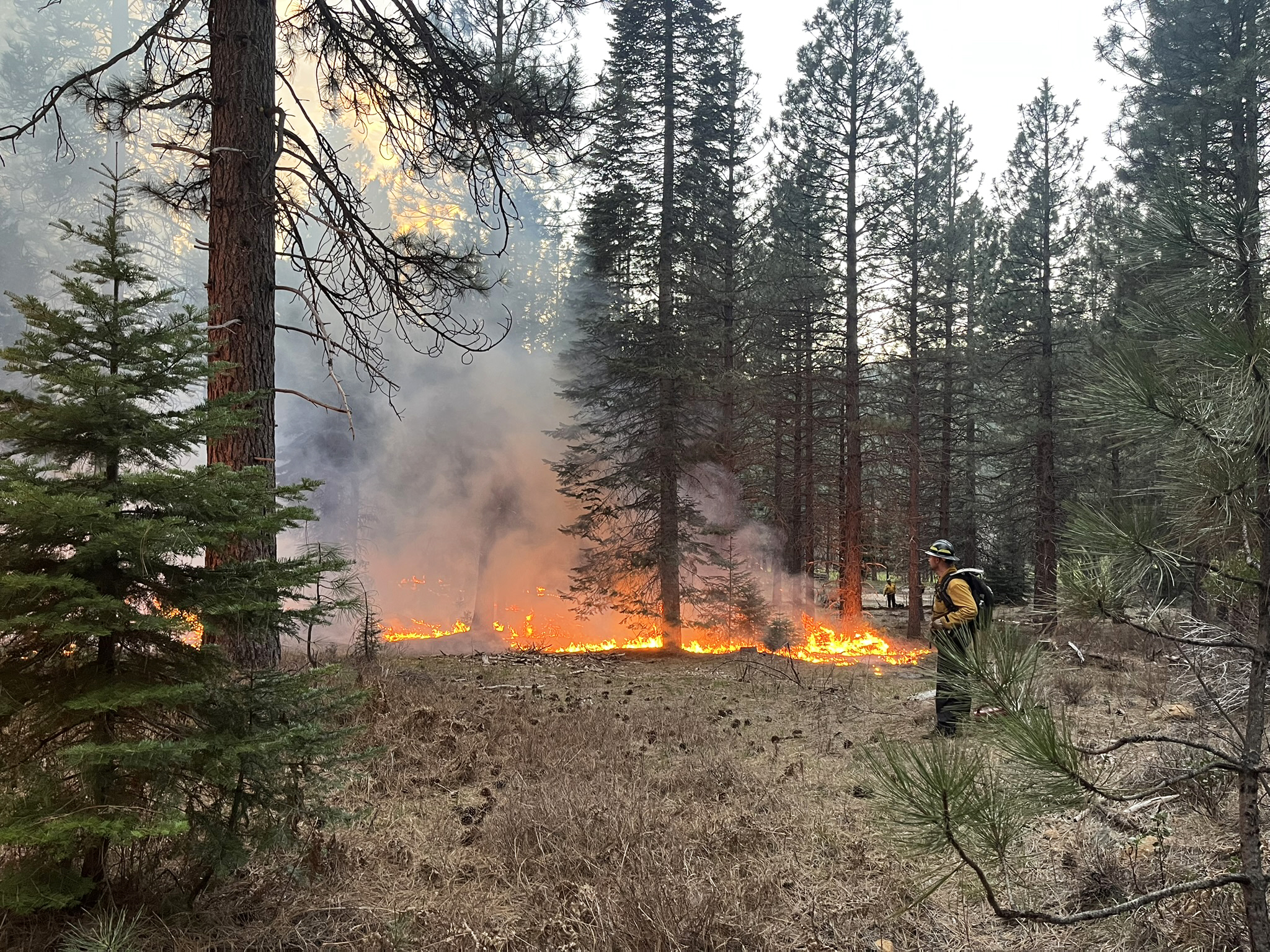
Good fire is integral to maintaining the health California’s landscapes. We know that stopping all fire is neither possible nor healthy, and 100% suppression efforts have contributed to conditions that have catastrophic fire results. We need to have proactive, thoughtful, and integrated plans that allow us to live with fire while supporting healthy ecosystems, thriving communities, and resilient forests.
To help advance this vision, Pacific Forest Trust (PFT), in partnership with California Forward (CA FWD) and Resources Legacy Fund (RLF), convened listening sessions with a wide swath of stakeholders across the state to gather input and develop a Strategic Action Plan for wildfire resilience and preparedness for California’s next administration. Read the Strategic Action Plan Here.
This Plan emphasizes the need to act at the landscape level, as well as increase community preparedness, and identifies a series of key actions to accelerate and improve impact in reducing catastrophic fire while also improving forest and ecosystem health. It recommends working at the watershed scale, conserving well managed, strategically located private forests to influence fire behavior, and investing in documenting Strategic Fire Zones and PODs (Points of Delineation).
The state has already begun investing in proactive landscape management. But with a backlog of more than a century of wildfire suppression, vastly different forest and other natural habitat conditions, a massive spread of the Wildland Urban Interface (WUI), and climate change, the need to reduce excessive fuels far outpaces the scale and timeliness of action needed to fundamentally improve landscape conditions.
Long-term, consistent stewardship of forest ecosystems is key to safely living with fire. Healthy forests and watersheds evolved with regular fire, and restoring fire as a management tool reduces the risk of catastrophic wildfire while supporting biodiversity, watershed health, and community safety.
California’s next governor will inherit an urgent wildfire challenge. Climate change is lengthening fire seasons, increasing fuel dryness, and amplifying extreme fire weather. Nearly 14 million Californians live in the Wildland-Urban Interface, facing growing risks from catastrophic wildfire, insurance market instability, and rising disaster costs.
California has made meaningful progress in recent years and continued investment and commitment will be essential to build on these successes in this critical time. The Action Plan lays out a path to build on existing programs and partnerships to protect our communities and establish California as a model for adapting to fire.
The Siskiyou Crest boasts exceptionally high botanical diversity, which in turn fosters a remarkable diversity of insects, amphibians, birds, and mammals.
The Mount Ashland Demonstration Forest’s (MADF) 1200 acres lie at the heart of this globally important landscape. We manage the conifer forests, meadows, wetlands, woodlands and chapparal to foster and restore this biodiversity, and also serve as a key connection and safe passage for wildlife between the Cascade Siskiyou National Monument and the Rogue Siskiyou National Forest late seral reserves.
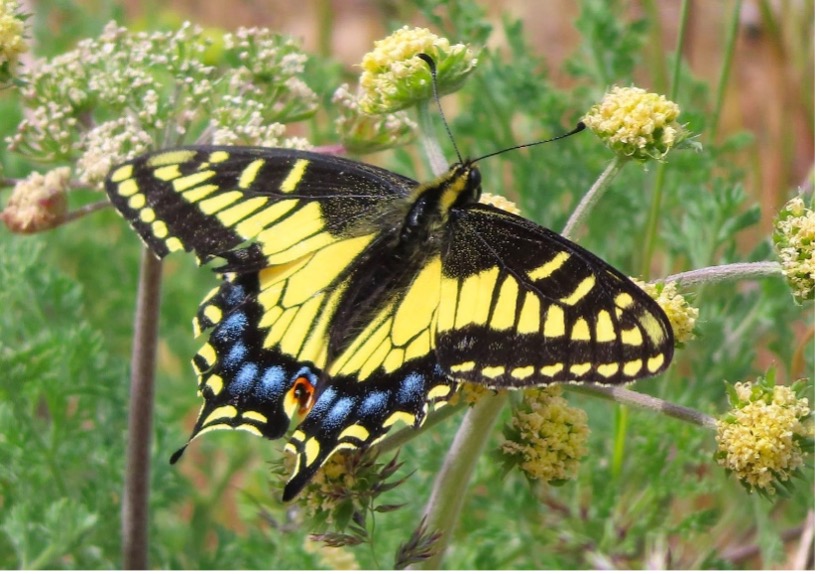
A prime example of the importance of this place for biodiversity is our documentation of the stunning variety of butterflies and moths (lepidoptera) at MADF. It’s no easy feat for small, almost weightless insects to flutter to habitats above 5000 feet, but the lure of the unique native pollinator plants is worth the effort.
Last year, we began working with Linda Kappen, a southern Oregon naturalist specializing in lepidoptera, to identify moths and butterflies who are making MADF their home–and also to create the data from which to track how this changes over time. She has documented dozens of species of butterflies, and is now in her second year of work identifying both the lepidoptera and their host plants.
Plants such as Nettle leaf Horsemint, St. John’s wort, Common Yarrow, Oregon Sunshine, Bigelow’s Sneezeweed, and Milkweed attracted Monarchs, Tiger Moths, a variety of Swallowtails, Sulphurs, Marbles, Hairstreaks, Blues, and Fritillaries, and Skippers.
When asked about why it’s important to survey for butterflies at MADF, Linda explained that “Butterflies are strong indicators of biodiversity and tell the health of a site’s ecosystem. Specific plants, trees and shrubs are used in all four stages of their lives. They are important pollinators which also play a role in the food chain. Belonging to the insect order Lepidoptera which includes moths, they can indicate the species richness of a site such as the Mt. Ashland Demonstration Forest and other forests worldwide.”
 PFT’s work to restore more natural, older forest qualities and resilience, while enhancing dry and wet meadows, wetlands, and riparian areas, is benefiting the region’s wonderful biodiversity. This work supports wildlife beyond the butterflies, such as northern spotted owls and gray wolf which are listed under the federal Endangered Species Act, and dozens of additional federal and state listed imperiled species such as the Humbolt marten, Pacific fisher, western pond turtle, and northern goshawk.
Every butterfly and moth observed is a reminder that healthy, connected landscapes support a wide web of life—and that conservation investments today help sustain biodiversity for future generations.
If you’re inspired to support work like this—please click the button below to donate.
ICYMI
In case you missed it (ICYMI), here are some other exciting things PFT has been involved in lately!
- Good News Network just published a story about a ringtail spotted in the Epstein Family Forest! Check it out here.
- On Arbor Day, Pacific Forest Trust President & co-founder Laurie Wayburn had an opinion piece published in The Progressive Perspectives and dozens of other outlets explaining why, and how, we can manage forests for their many benefits. Read the full article here.
- PFT president and co-founder Laurie Wayburn wrote an op-ed in response to a recent article about raising the height of Shasta Dam, explaining other forest-based solutions to water reform. Read more details here.
- A quote from Pacific Forest Trust was featured in the San Francisco Chronicle’s front-page story on California’s cap-and-invest overhaul, which may gut the fund that supports that state’s most critical wildfire, forest, and climate programs. Read the article here.
- We’re hiring! If you love forests and have experience in communications, fundraising or conservation project management, check out our current job openings.